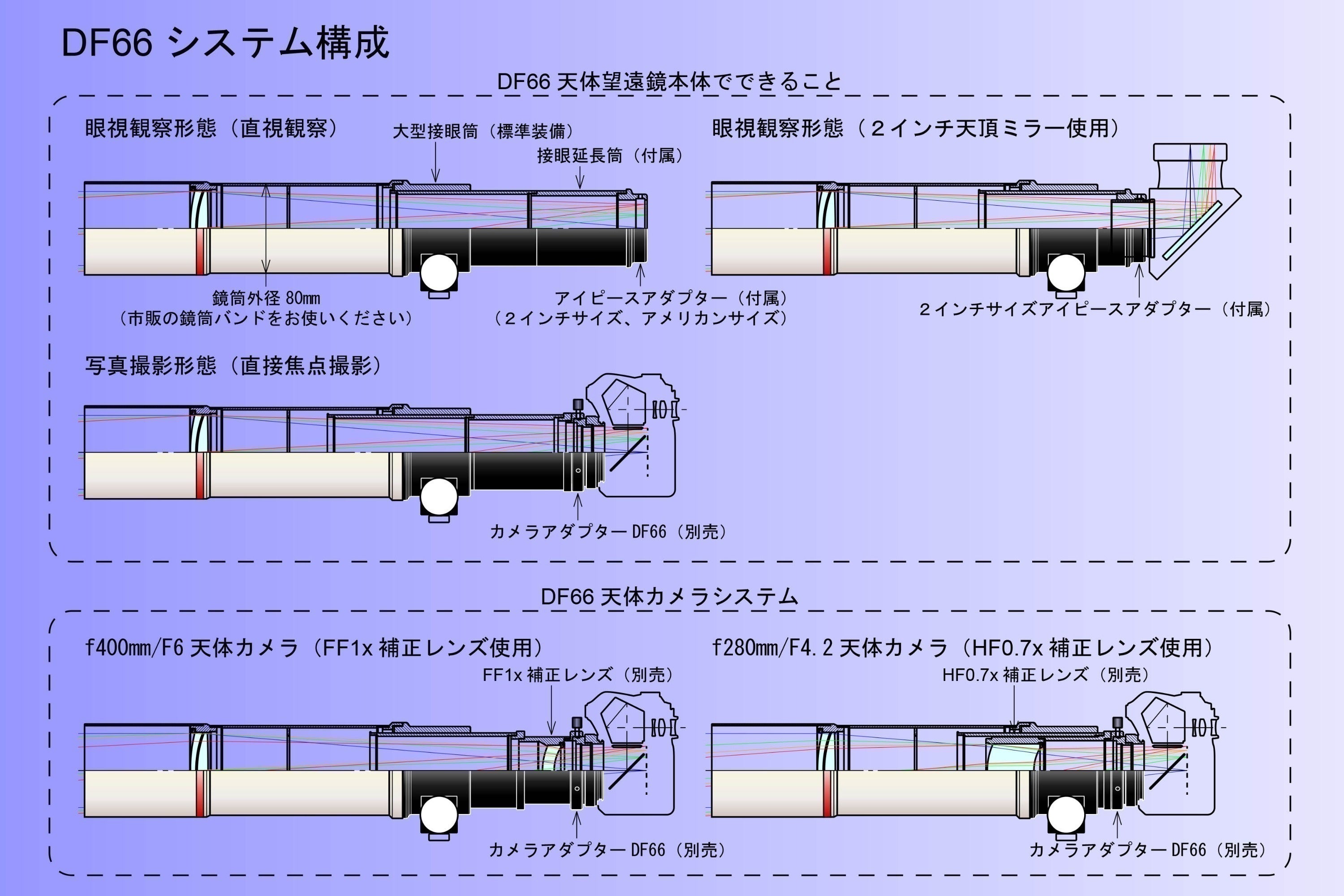
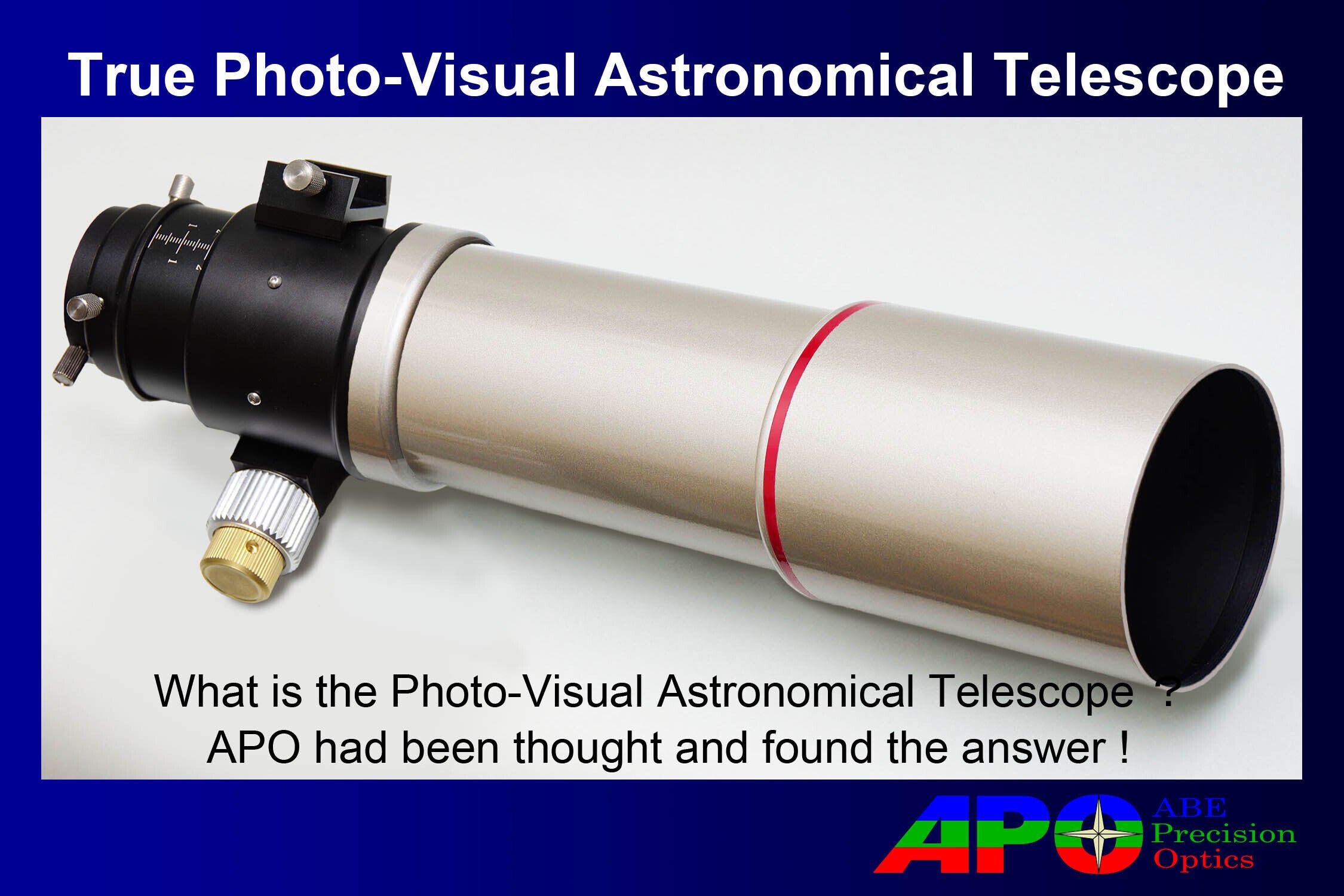
Spot Diagram for the DF66 System
Spot diagrams are frequently seen in promotional materials for photographic telescopes.
However, spot diagrams can give vastly different impressions depending on how they are presented, and it will be difficult to understand how to interpret them. Therefore, I think viewing actual sample images is better than spot diagrams to understand performance.
Please compare the spot diagram below with sample images to assess the photographic performance of the DF66 system.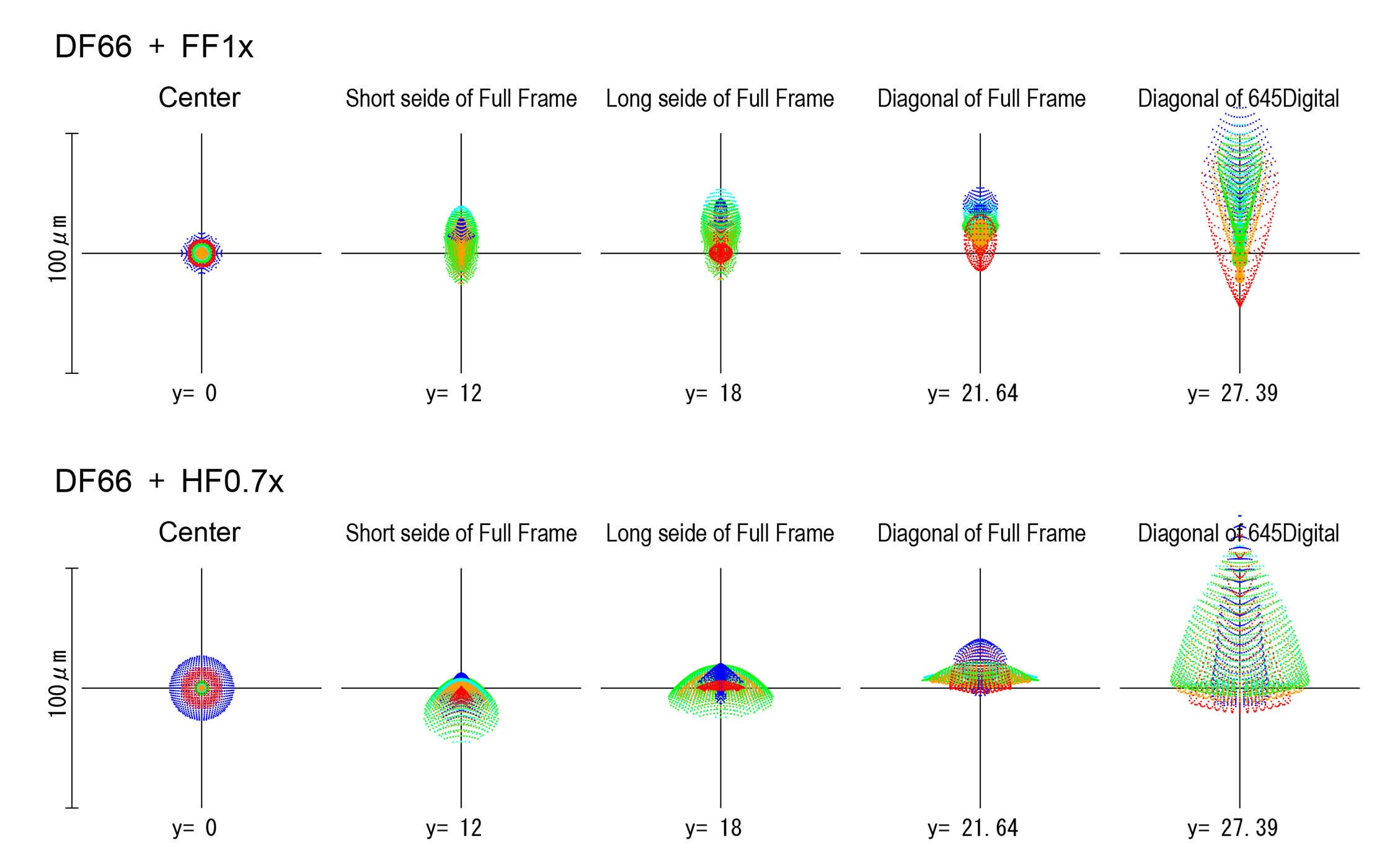
DF66 System Practical Application Example
While I am deeply embarrassed to show others these images due to the crude nature of everything from shooting to image processing, I believe it is important to evaluate the degree of point spread compare with a spot diagram, so I am posting them.
I hope that those who become users will be able to take many beautiful photographs.
M45 taken by DF66 + FF1x (Photographed with Full-Frame Digital SLR Camera)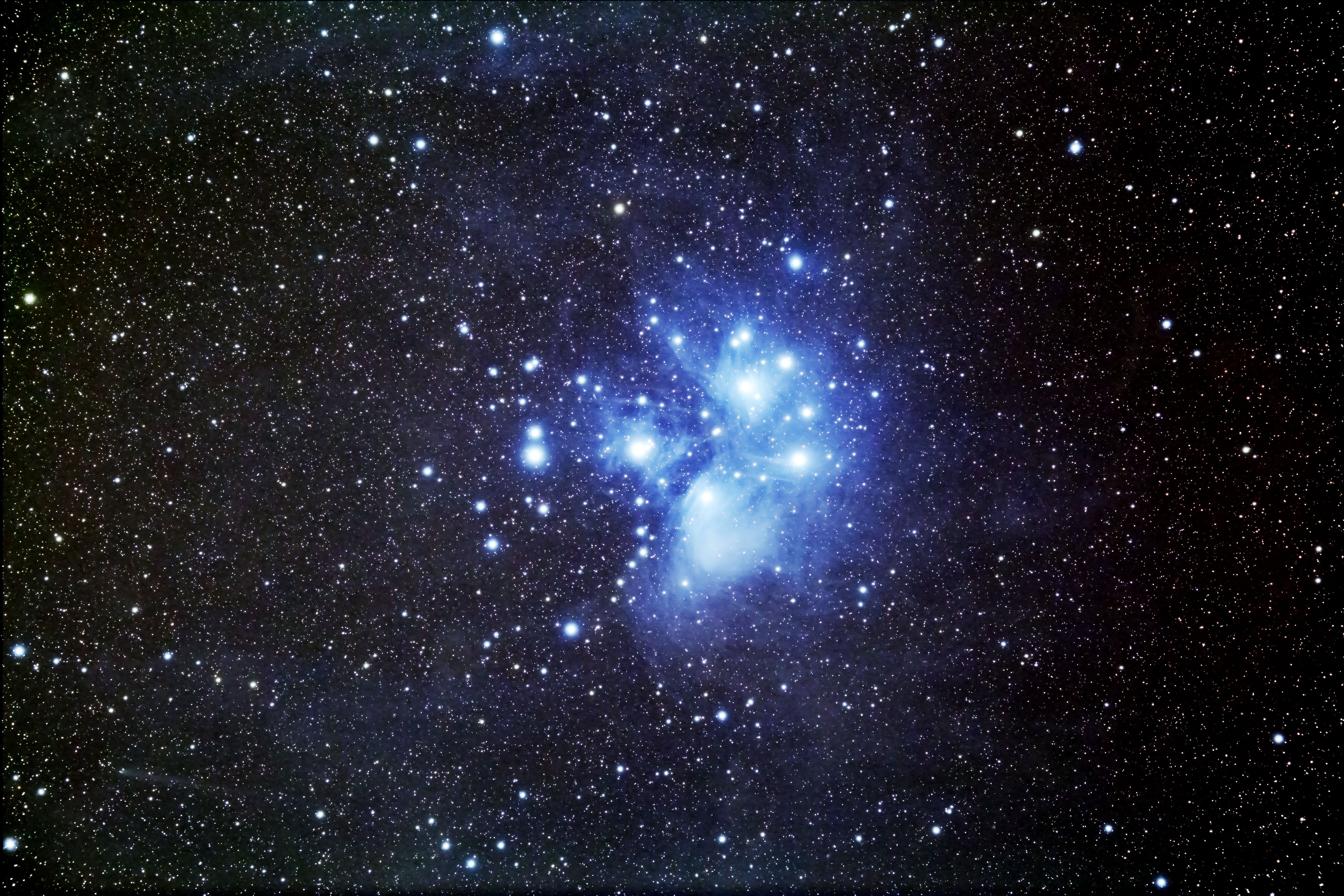
NGC7000 taken by DF66 + HF0.7x (Photographed with Full-Frame Digital SLR Camera)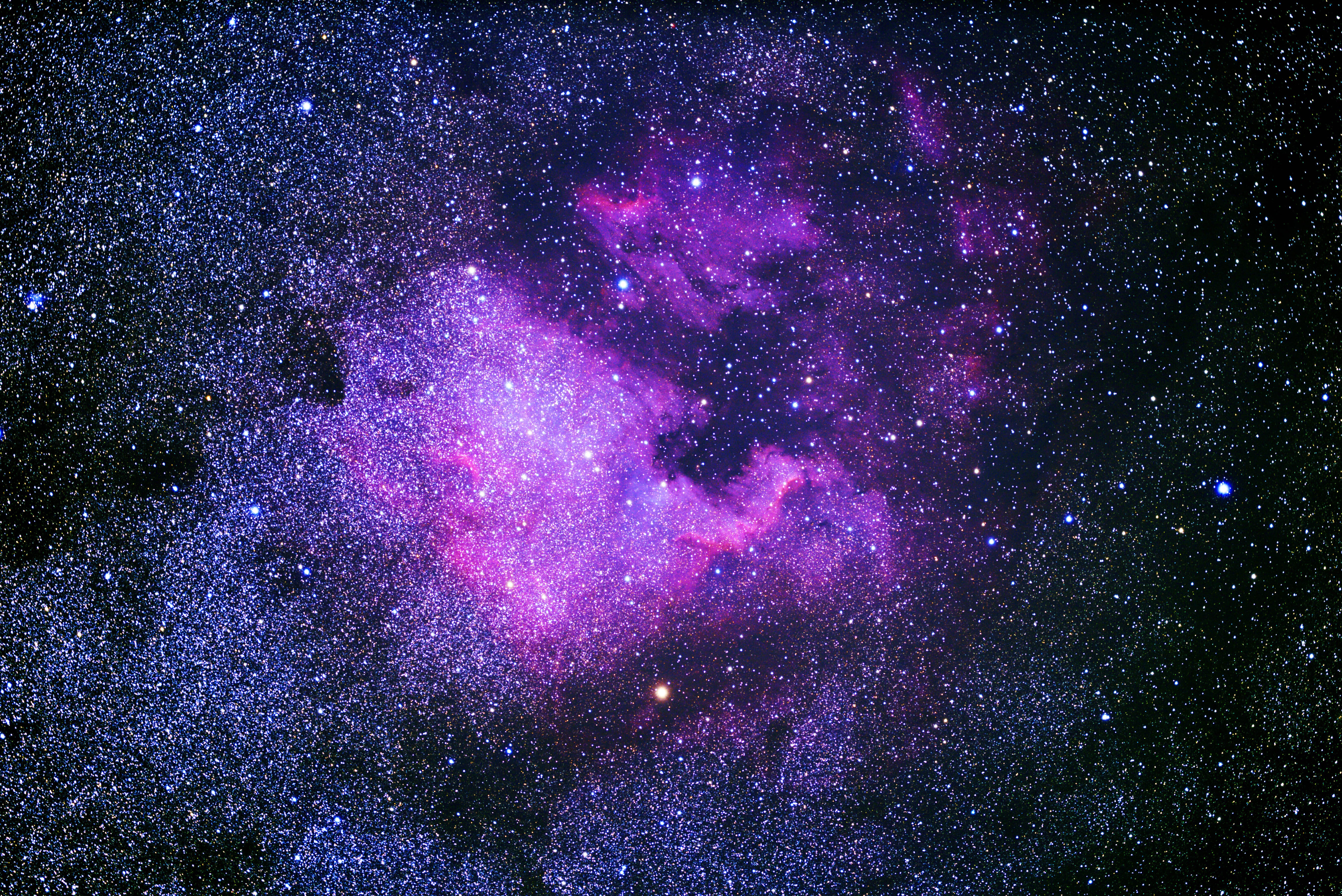
Double cruster taken by DF66 + FF1x (photographed by 645 mirrorless digital camera)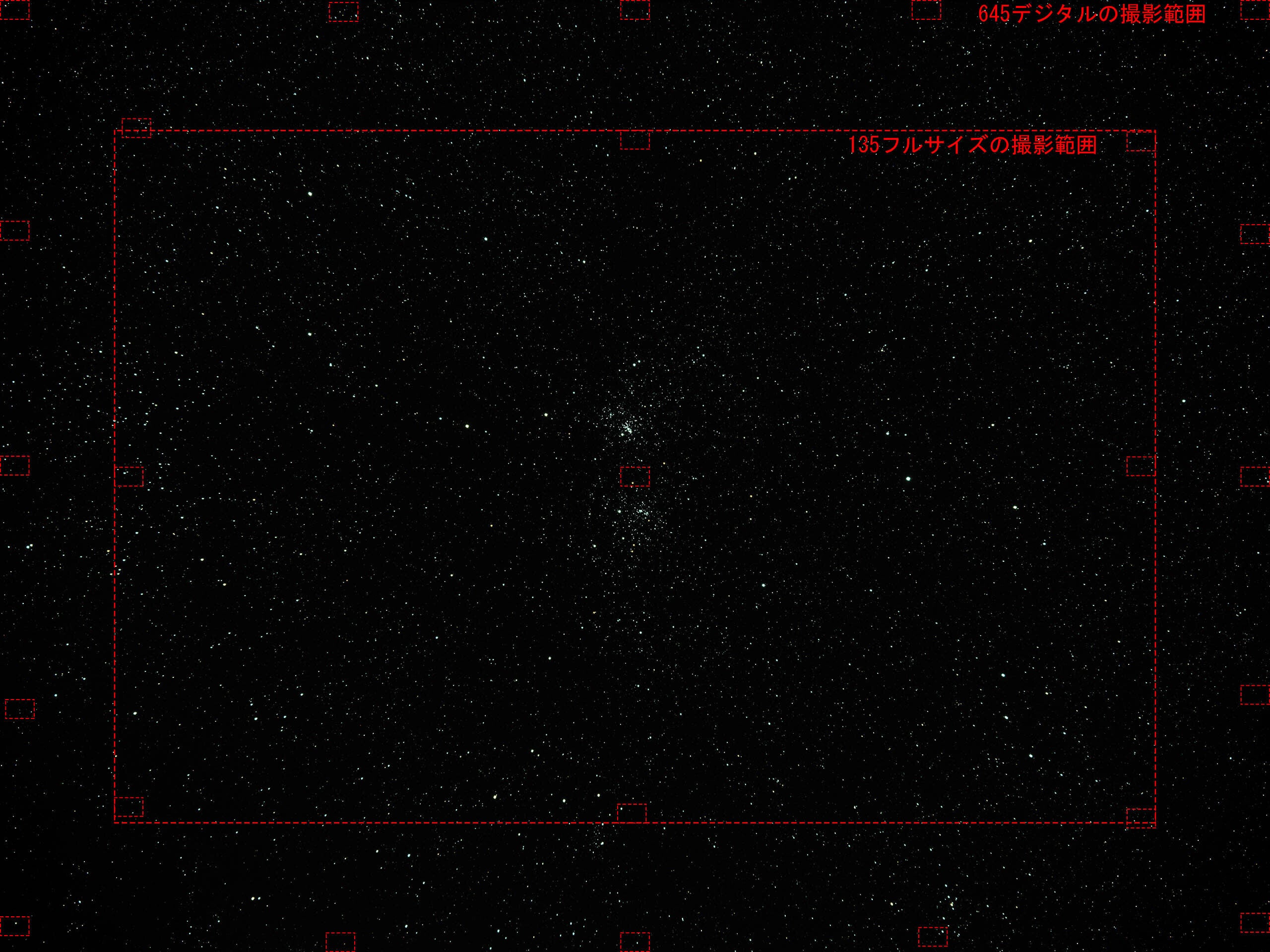
Next is pixel-to-pixel resolution image above shown red dashed box (270x180 pixels)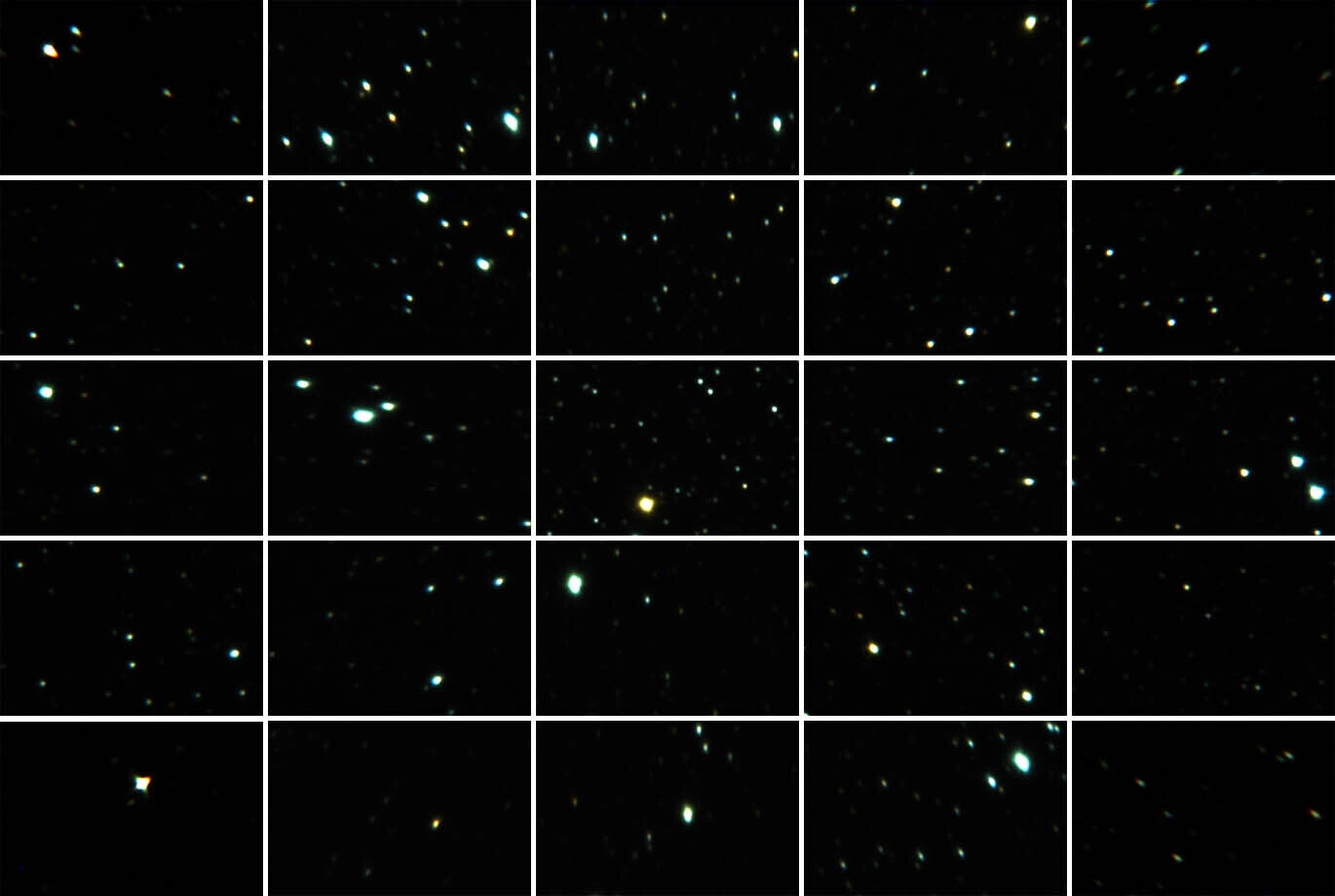
Central area of Orion taken by DF66+FF1x (photographed by 645 mirrorless digital camera)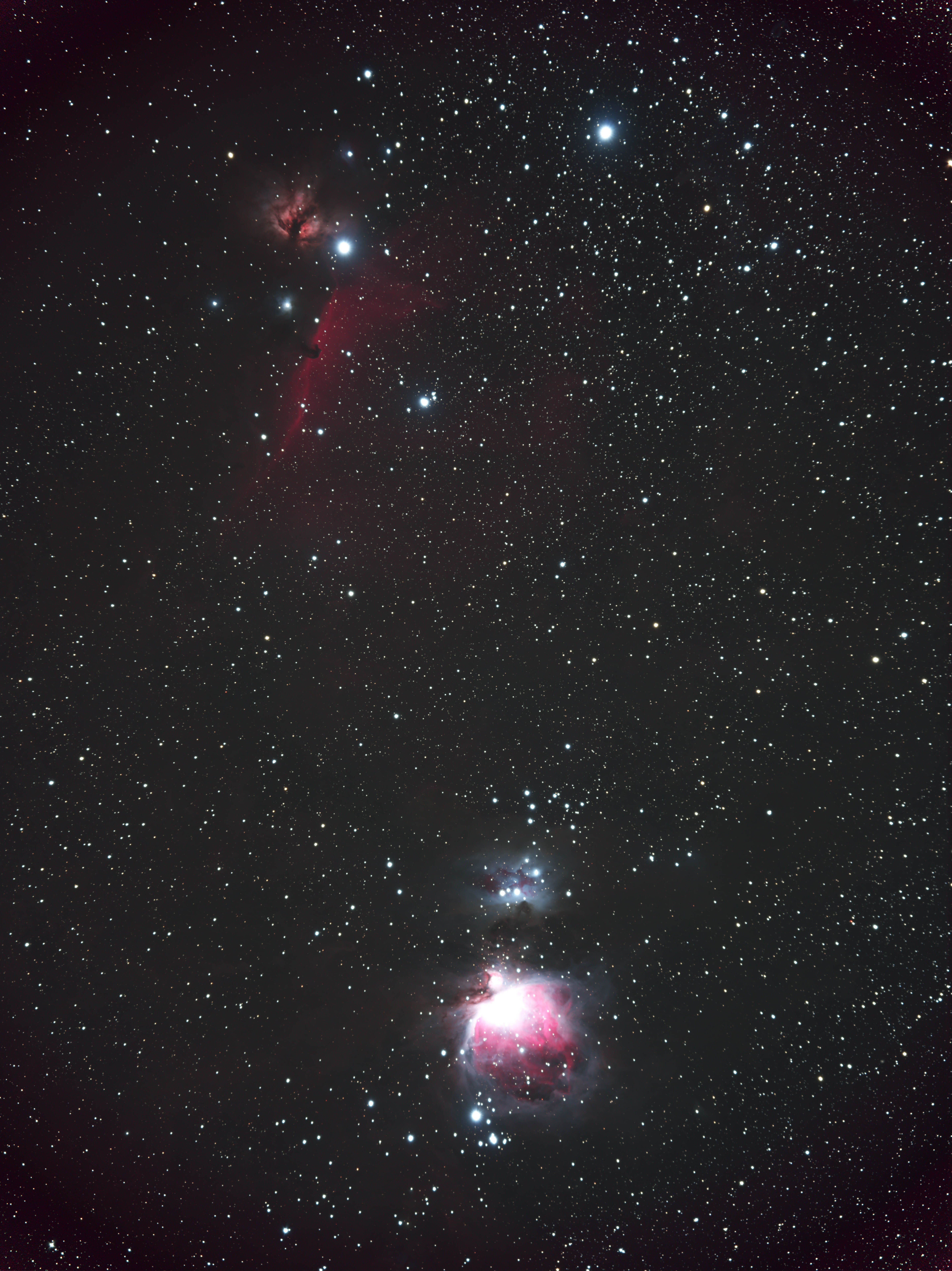
Double cruster taken by DF66 + HF0.7x (photographed by 645 mirrorless digital camera)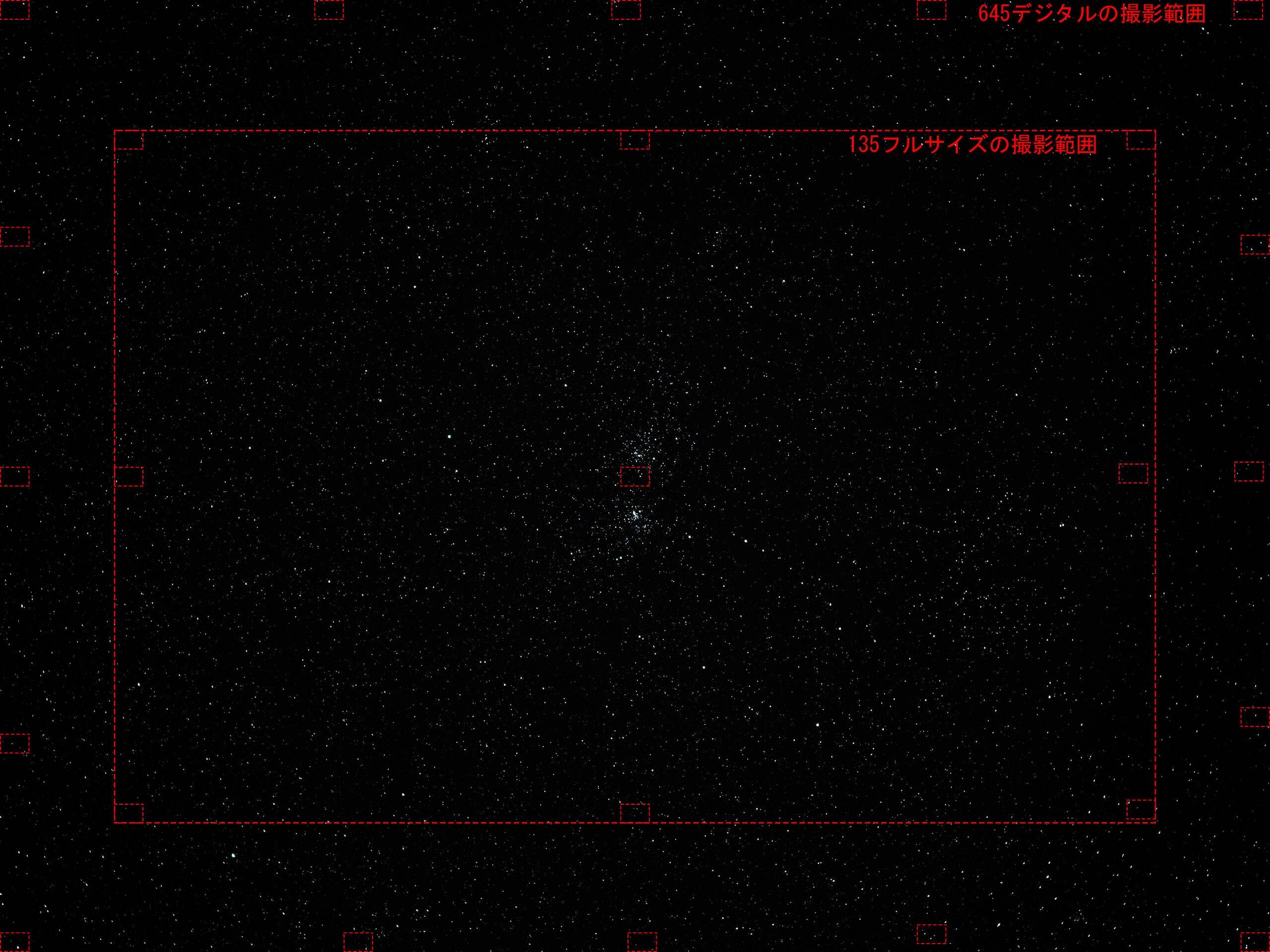
Next is pixel-to-pixel resolution image above shown red dashed box (270x180 pixels) .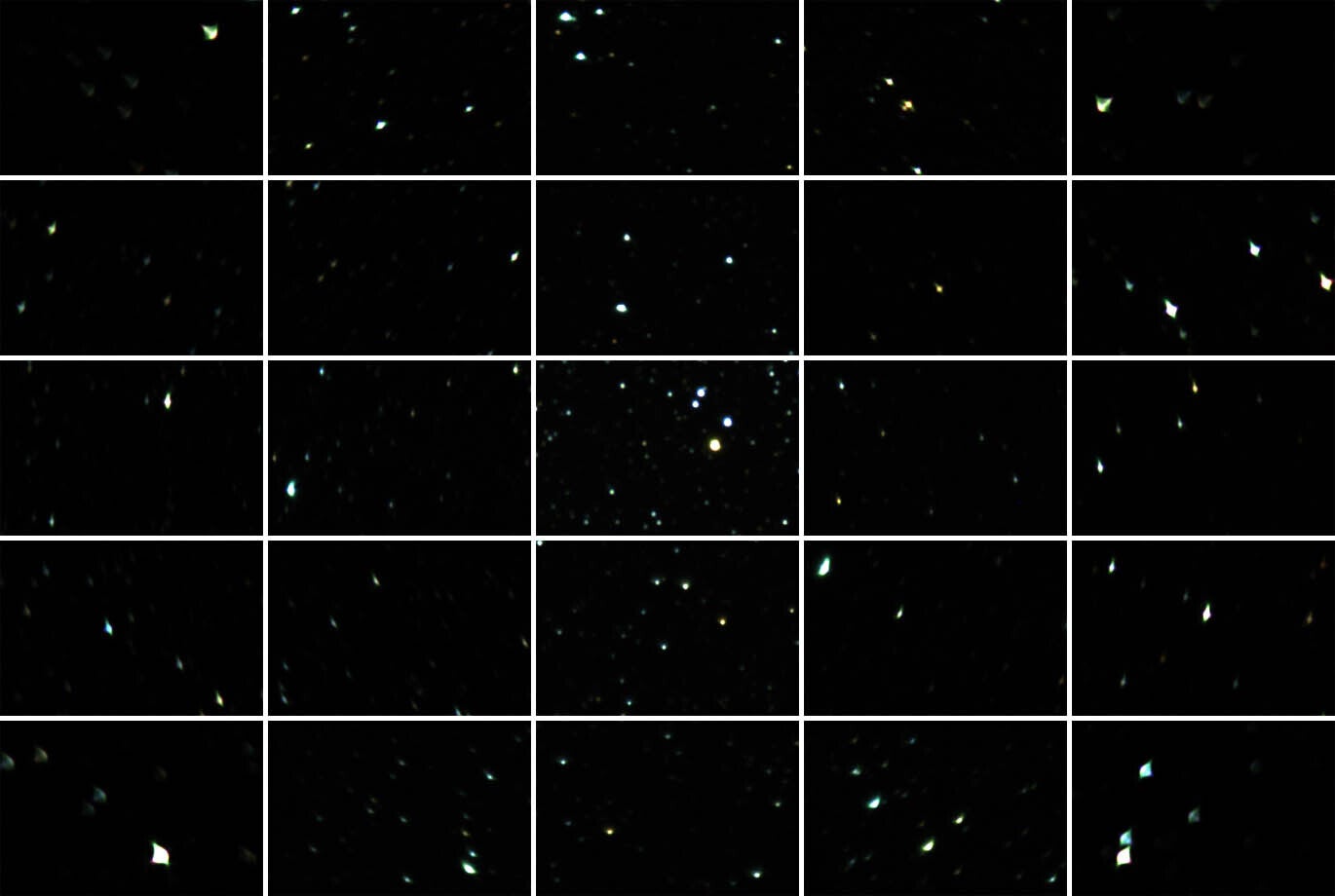
Central area of Orion taken by DF66 + HF0.7x (photographed by 645 mirrorless digital camera) This is also reduced 8K version (5775x7680 pixels)
Background of Project Launch
The DF66 system project began in pursuit of the ideal portable system telescope for the 2018 total solar eclipse visible across the North American continent.
While at PENTAX, a compact 7.5cm telescope had been sold. DF66 had been envisioned system as an evolution of that portability and expandability, but production costs were based on PENTAX's capabilities at the time.
However, upon actually examining production feasibility, costs for aluminum tubing and machining had been increased dramatically caused of rising prices and a weaker yen over a decade after my time at PENTAX.
This made the DF66 system's projected price far exceed expectations, leading to the project's abandonment. After about seven years of relentless effort examining production for the DF66 system, a realistic path to offering it at a feasible cost have been in sight.Furthermore great hope had given to achieve this without compromising any performance or functionality.
So I decided to launch this project to enable many of you to experience the DF66 system.
Current Preparation Status
The high optical performance of the prototype lenses developed for the 2018 launch has been confirmed.
Lenses for 45 set objective lens and 27 sets each of two types of corrector lens have been completed.
Mechanical designs for lens frames and tubes are complete.
I have secured metalworking partners and established production systems for assembling and adjusting telescopes and corrector lenses, as well as packaging.
I will immediately begin preparing returns once the project is successfully funded.
About Returns
☆ DF66 Astronomical Telescope Main Unit ・Effective aperture: 66mm, focal length: 400mm, F6
・Features a high-performance doublet fluorite apochromatic objective lens with a fluorite crystal lens in the rear element  ・Full multi-coating prevents ghosting and flare while achieving high light transmission
・Front multi-coating uses fluorine coating to resist smudges and facilitate easy cleaning and wiping
・Two objective lenses are high-precision Canon Optron products (lens grinding and coating processes outsourced)
・Features a large 61mm inner diameter draw tube, enabling vignette-free photography even with 645 format digital cameras
・Combining the FF1x and HF0.7x corrector lenses transforms it into two different astro cameras: 400mm F6 (FF1x) and 280mm F4.2 (HF0.7x)
・Tubus outer diameter: 80mm (compatible with a wide variety of commercially available tube bands)
・Overall length: 345mm, Weight: 1500g (excluding accessories)
・Includes eyepiece extension tube, 2-inch eyepiece adapter, American-size eyepiece adapter, etc.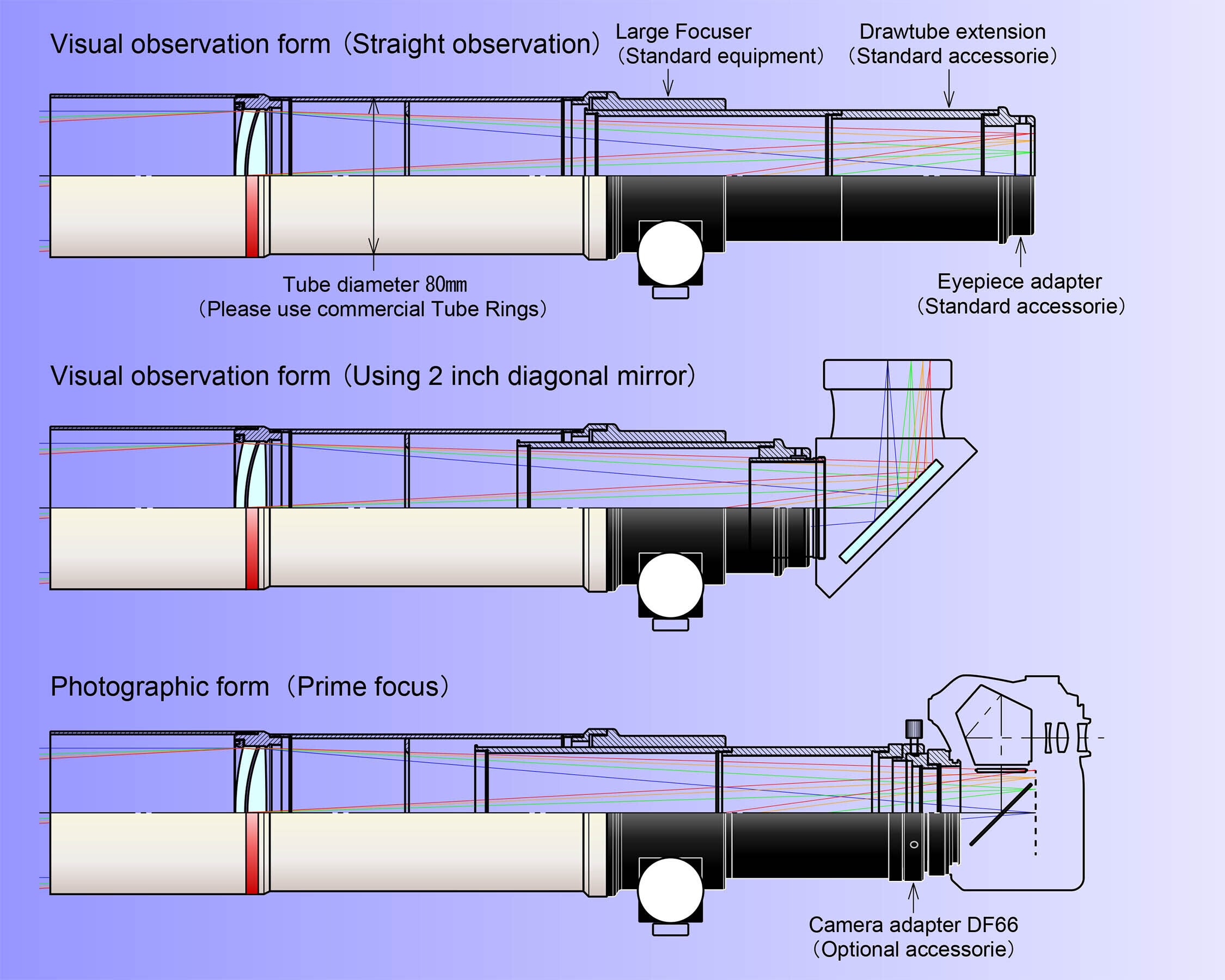
☆ FF1x (Field Flattener 1x) Corrector Lens ・Forms 400mm F6 Astrograph when mounted on the DF66 tube
・Lens configuration: 1 group, 2 elements
・Effectively corrects field curvature of the DF66 objective lens
・Effectively corrects coma aberration and lateral chromatic aberration to achieve high resolution
・Delivers high image quality with excellent clarity, free from ghosting and flare
・Achieves high transmittance through full multi-coating
・Ensures a wide image circle compatible with 645 digital cameras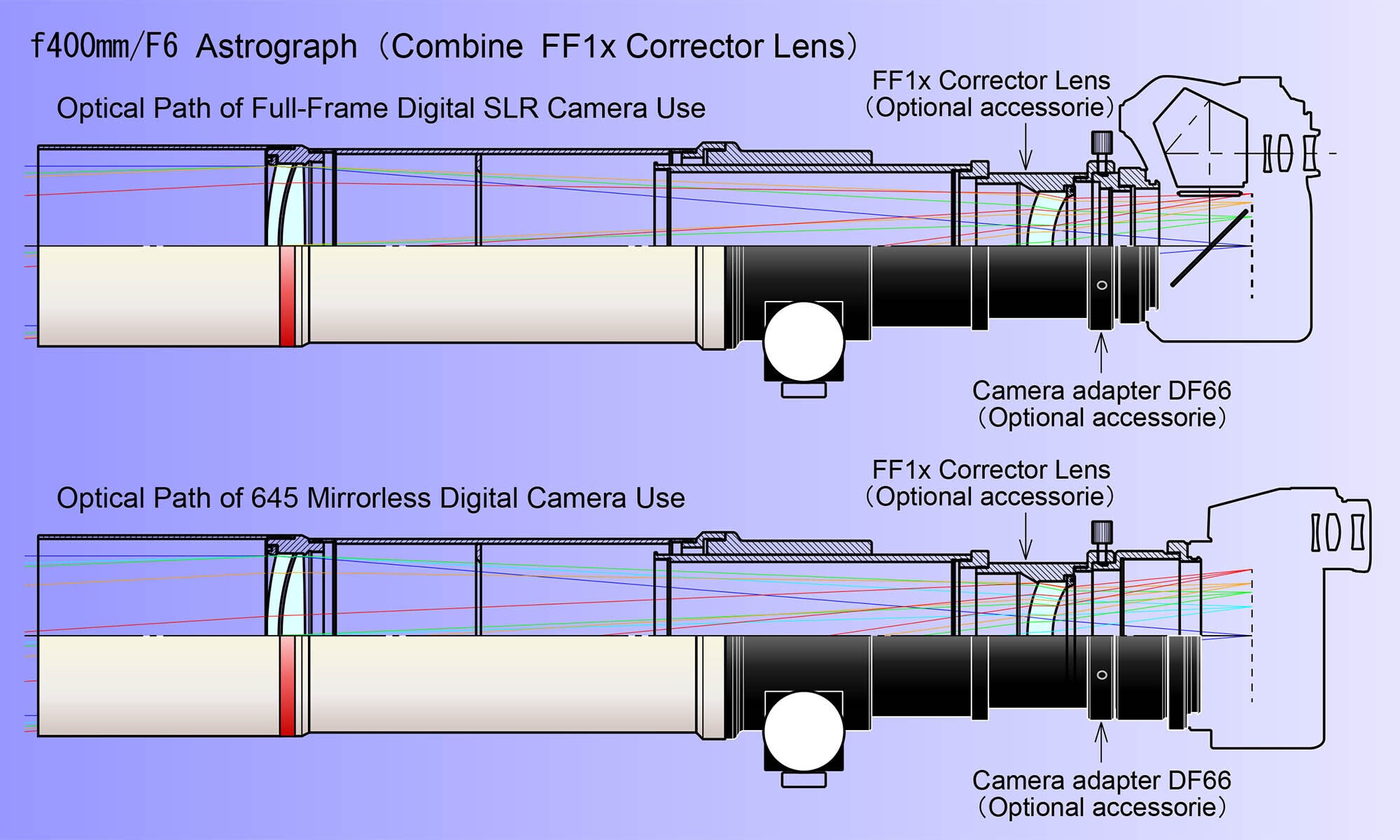
☆ HF0.7x (Highspeed Flattener 0.7x) Corrector Lens ・Forms 280mm F4.2 Astrograph when mounted on the DF66 tube
・Lens configuration: 3 groups, 4 elements
・Shorten the focal length of the DF66 objective lens by 0.7x while effectively correcting field curvature
・Effectively corrects coma aberration and lateral chromatic aberration to achieve high resolution
・Delivers high image quality with excellent clarity, free from ghosting and flare
・Achieves high transmittance through full multi-coating
・Ensures a wide image circle compatible with 645 digital cameras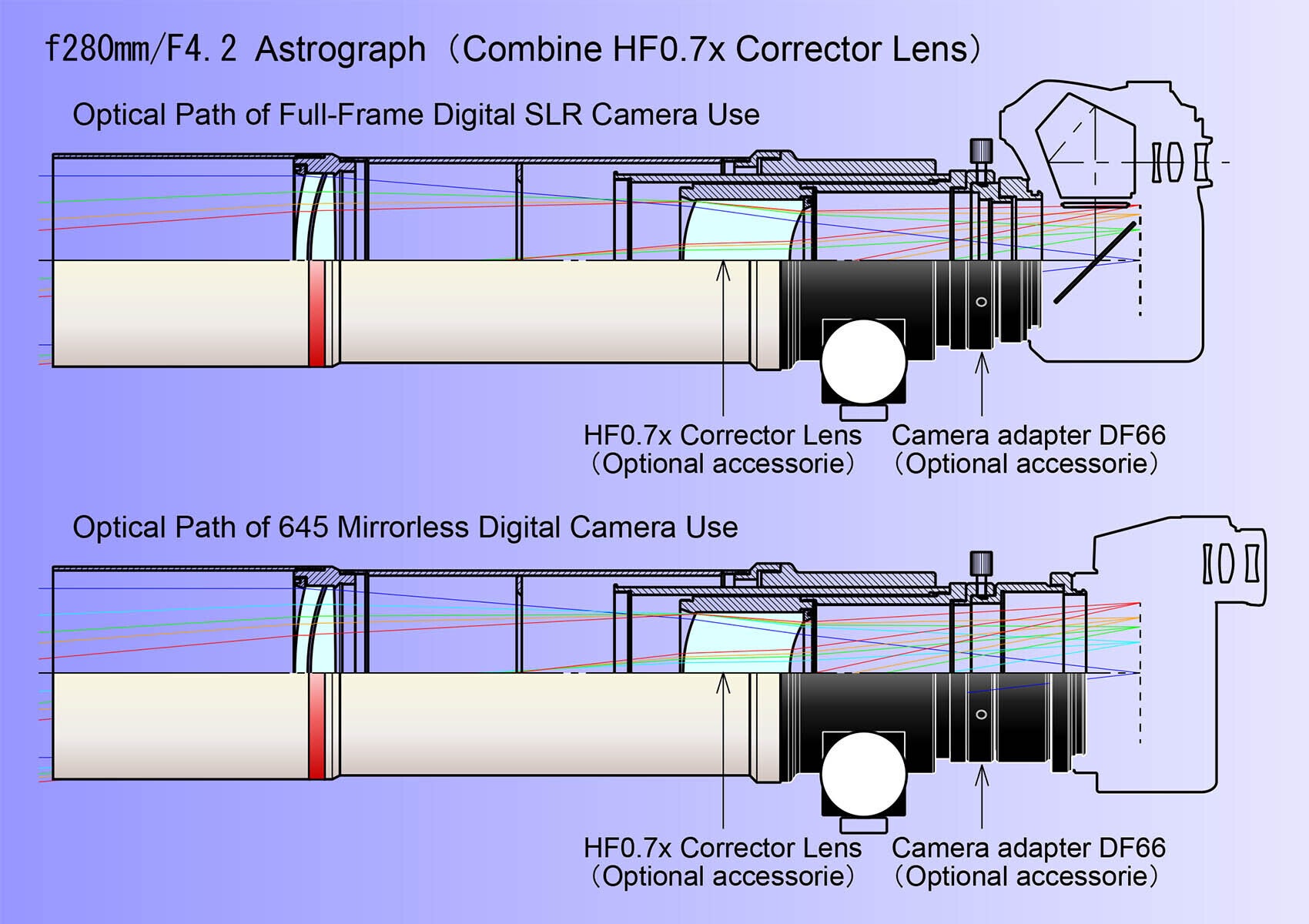
☆ Camera Adapter DF66 ・Adapter for mounting a camera on the DF66 lens barrel
・Includes two types of inner tubes: a standard inner tube compatible with DSLR and mirrorless digital cameras (full-frame, APS-C, Four Thirds), and a large-diameter inner tube compatible with 645 mirrorless digital cameras
・Features a camera rotation mechanism
・Please purchase the appropriate camera mount separately from Tomytec Co., Ltd.'s BORG camera mount series for your specific camera model.
*When using a Pentax 645 series camera, mount the BORG Camera Mount for Pentax 645 directly onto the FF1x lens barrel or the HF0.7x adapter.
Schedule
January 2026 Crowdfunding ends
Arrange purchase of prefabricated parts, order custom parts
April 2026 Parts arrive, arrange assembly and adjustments
May 2026 Shipping returns
Finally
Forty years have passed since a young astronomy enthusiast first became involved in optical design, constantly pondering what constitutes the ideal astronomical telescope.
During that time, telescopes underwent a major paradigm shift from silver halide film to digital, while various optical systems rose and fell.
Yet the celestial bodies in the sky remain unchanged, as they always have. And I believe the human desire to see and record their beautiful forms remains unchanged as well. The ideal telescope that fulfills this simple desire is not a fragile instrument whose short-lived pursuit of one-dimensional performance leads to a brief lifespan.It is one that maintains universally satisfying performance for years to come, never becoming obsolete.
While the pursuit of such an ideal is endless, the DF66 system is one embodiment of it.
I would be delighted if many of you could share this vision.