

Thank you very much for visiting this page.
In Kinugasa, Kyoto, there is a striking white building located along the “Kinukake-no-Michi” path, which connects the World Heritage sites of Kinkaku-ji, Ryōan-ji, and Ninna-ji.
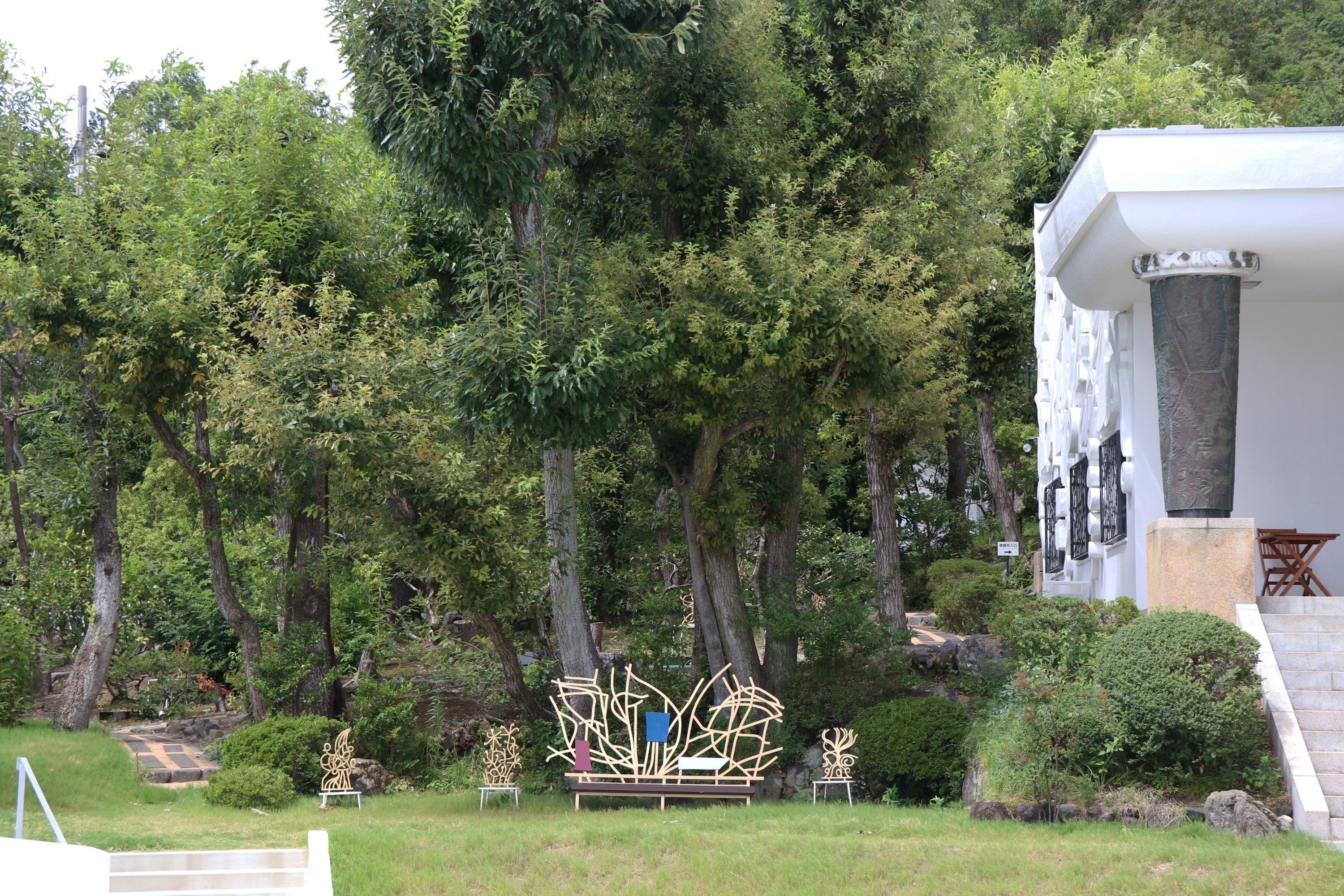
With abstract reliefs covering its entire exterior and a presence that makes the entire building seem like a single work of art, this is the Kyoto Prefectural Insho-Domoto Museum of Fine Arts.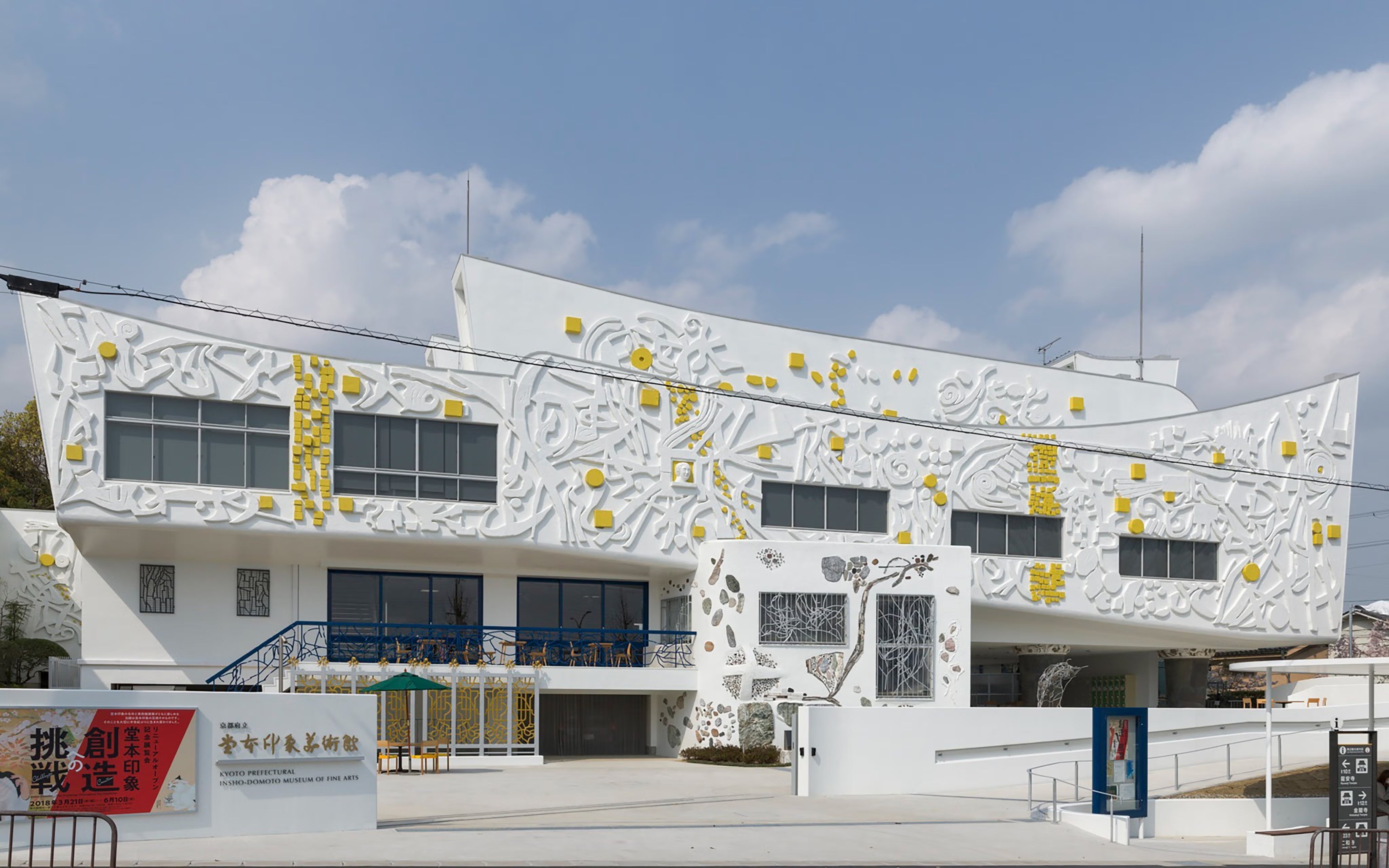
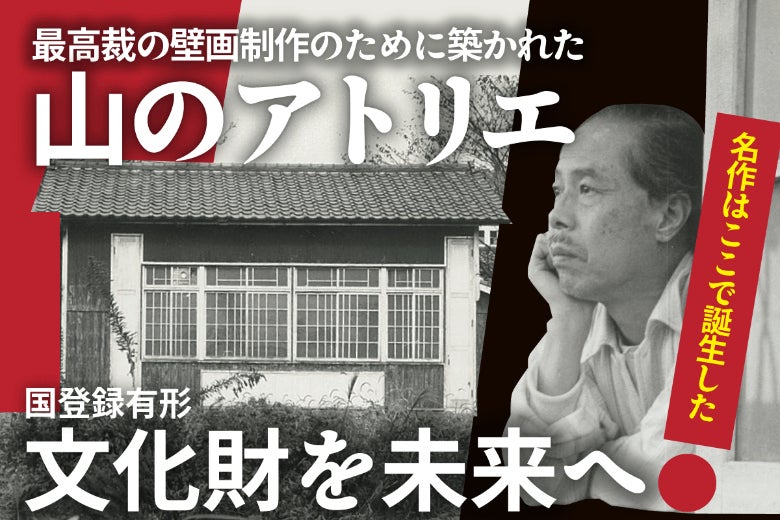
This museum houses a building known as the “Mountain Studio,” which is not normally open to the public.
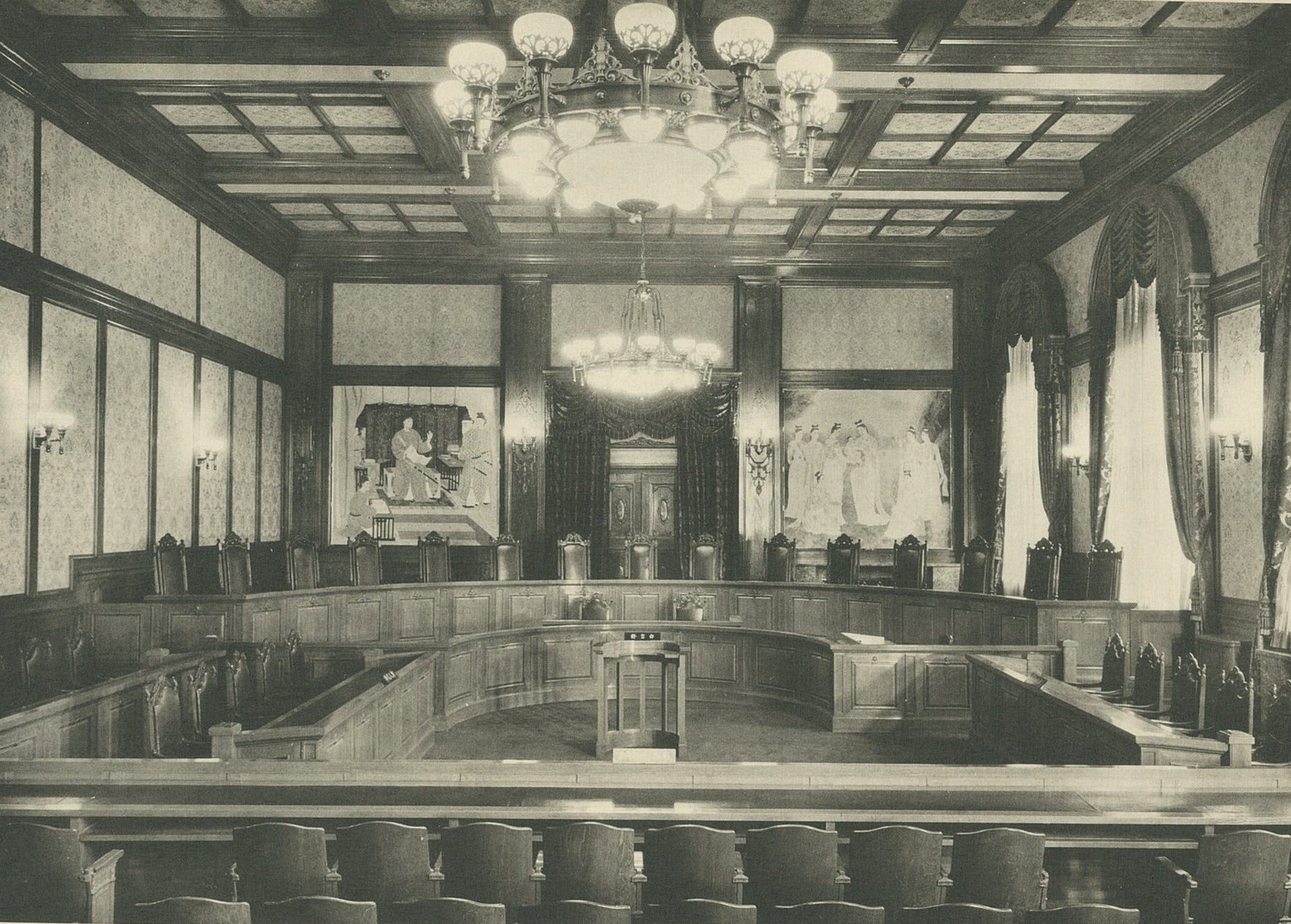
It is the studio that the master of Japanese painting, Insho Domoto, built to create the massive triptych of murals that adorn the Grand Court of the Supreme Court.
The narrow doors on either side of the window were installed to allow for the removal of the approximately 3-meter-wide murals.
This is the space where Insho, prepared for the criticism he anticipated—saying, “I’ll probably be criticized for about a hundred years”—immersed himself in the creation of major works, including the sliding door paintings for Chisan-in Temple, which he executed with a boldly modern vision.

On August 6, 2025, this “Mountain Atelier” and the main museum building were designated as National Registered Tangible Cultural Properties. However, 75 years after its construction, the atelier has deteriorated significantly, and it is becoming increasingly difficult to preserve its value as a cultural asset.
To ensure that this space, imbued with the spirit of the master, is passed on to future generations, we are now seeking your support through crowdfunding.
Insho Domoto, a Master of Japanese Painting, and the Museum He Designed Himself
Insho Domoto (1891–1975) was a Japanese painter who played a central role in the Kyoto art scene from the Taisho to the Showa periods.
In 1961, he was awarded the Order of Culture. His artistic style evolved from traditional figurative painting to social genre paintings and then to innovative abstract works, changing so drastically that it is hard to believe they were created by the same artist.
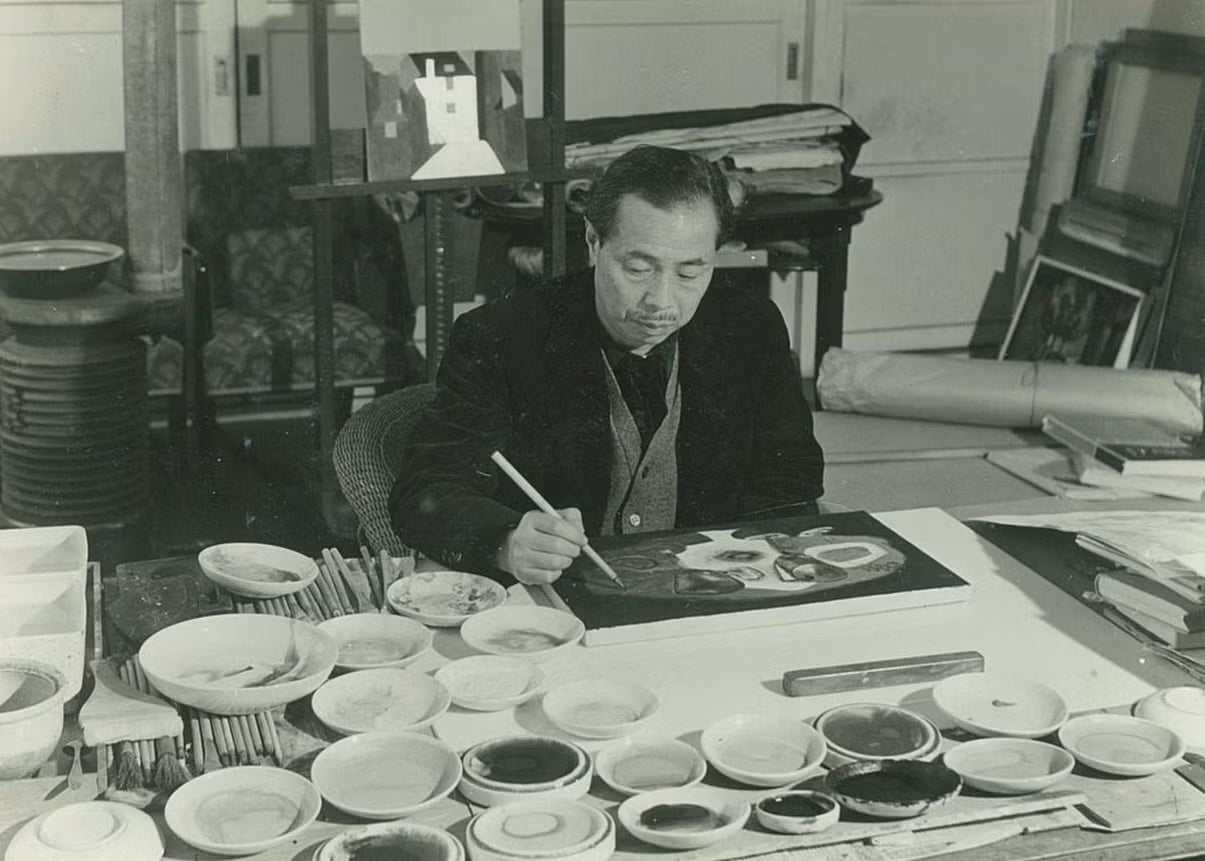
Once he had perfected a particular style, he never clung to it but always took a step toward new horizons.
Throughout his life, he continued to challenge himself creatively. He created numerous murals for public buildings such as temples, shrines, and churches—including the Great Pagoda (Konpon Daito) at Mount Koya and the Great Hall of the Supreme Court—and his works continue to move the hearts of many people to this day.
Born in 1891 as the third son of nine siblings to a sake brewer in Kyoto, he graduated from the Kyoto Municipal School of Fine Arts and Crafts. While working as a textile designer, he aspired to become a painter and enrolled in the Kyoto Municipal School of Fine Arts.
In 1919, he was selected for the first time for the 1st Imperial Art Exhibition with his work “Fukakusa.” He subsequently received a Special Selection for “Chōkiku-zu” and the Imperial Art Academy Award for “Kegon,” quickly establishing himself as one of Japan’s leading painters.
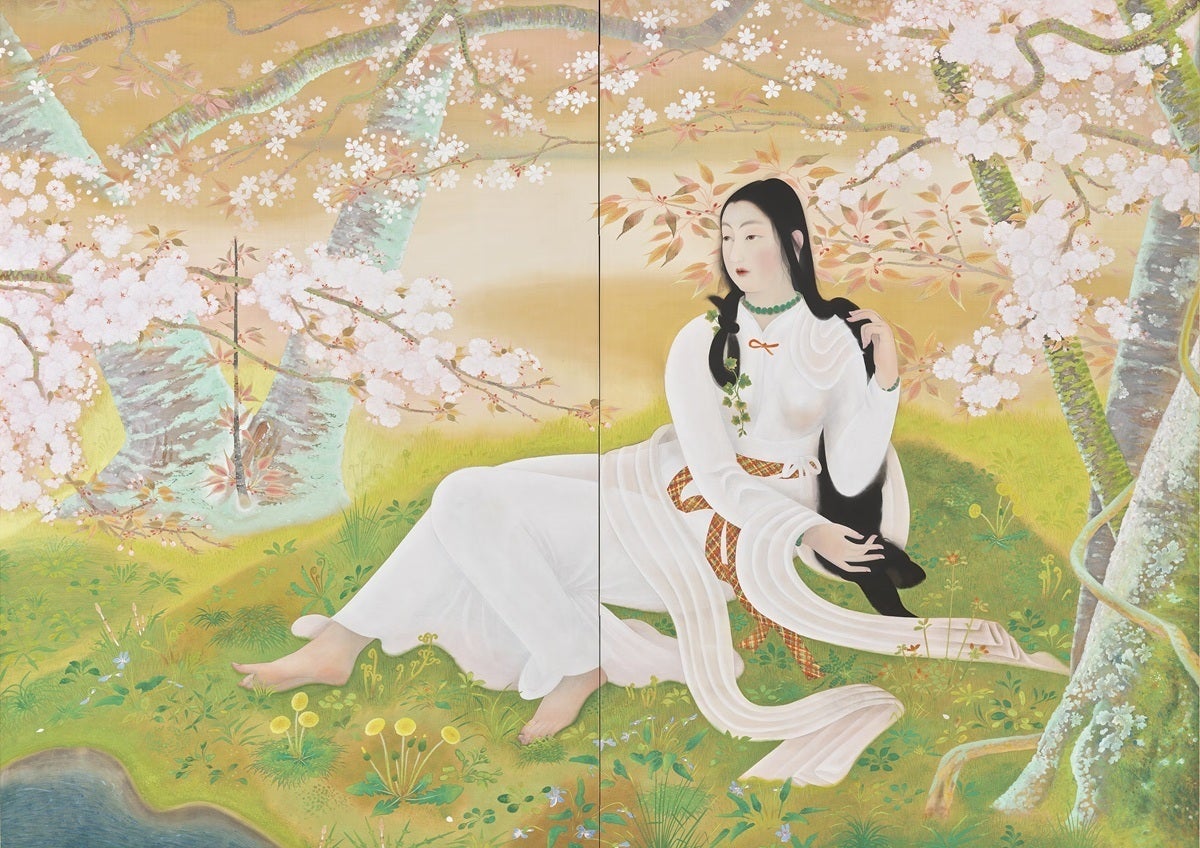
Kinohanasakuyahime (Insho Domoto, 1929)
The murals he created for shrines, temples, and churches are unmatched by any other modern or contemporary painter in terms of both quantity and quality; they are counted among Inshō’s greatest achievements and number approximately 600.

Saihoji Temple, famous as the “Moss Temple” for its sliding door paintings
Going beyond traditional painting styles, he specialized in a magnificent, decorative style after the war; the fusuma paintings he created throughout nearly his entire career reflect the distinctive styles of each period, from his early years to his later years.
Insho’s artistic career cannot be summed up in a single phrase. After mastering the techniques of traditional Japanese painting, he traveled to Europe for a study tour after turning 60.
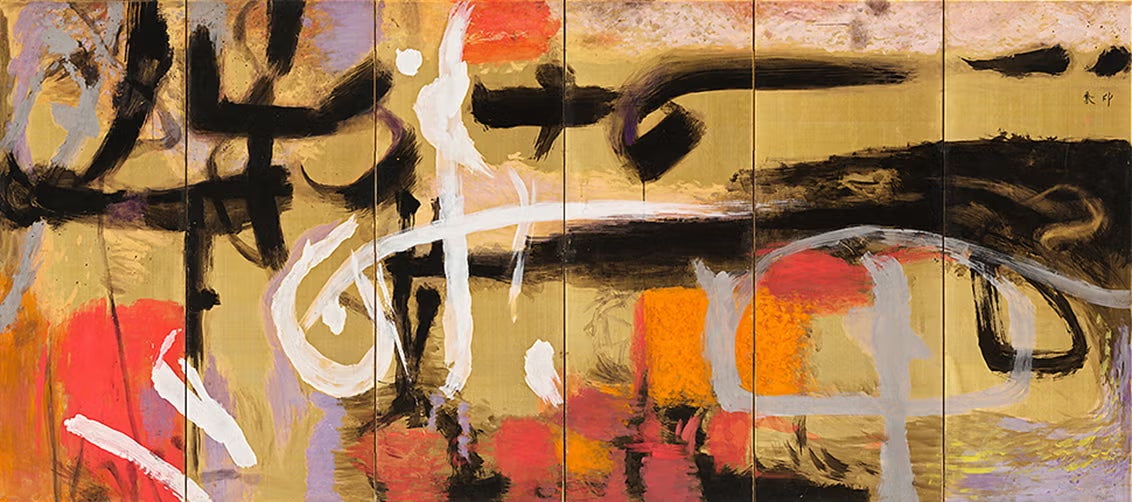
Fujin (Insho Domoto, 1961)
Inspired by the Western art he encountered there, he boldly ventured into the world of abstract expressionism. “Breaking with tradition to create new art is the true essence of tradition”—these words of Insho’s embody the very conviction of an artist who never ceased to evolve.

In 1966, hoping not only to exhibit his own works but also to contribute to the development of Japanese painting and give back to Kyoto, he invested his own funds to build an art museum.
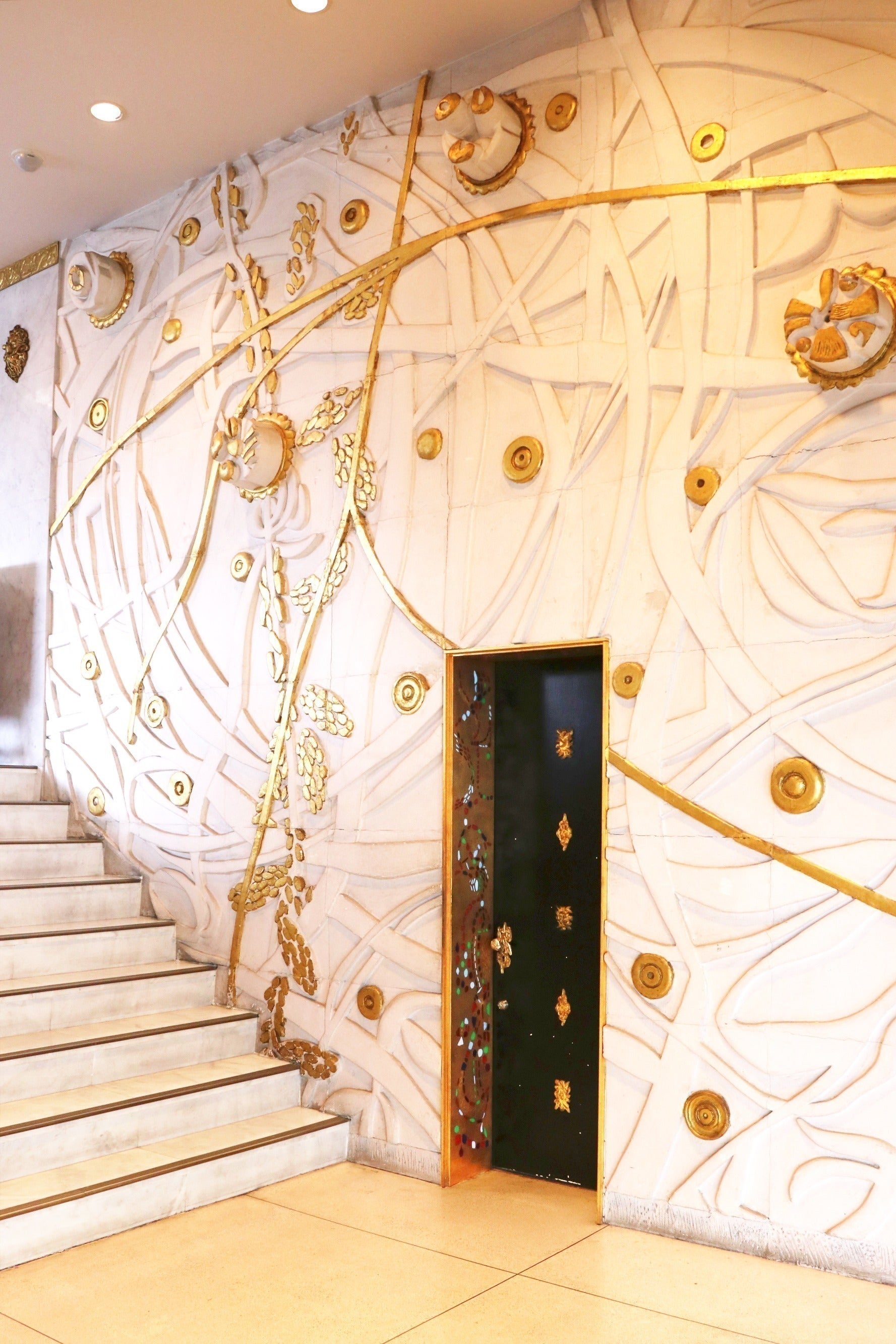
Remarkably, he designed everything himself—from the exterior and interior to the furniture and lighting. Drawing on his experiences touring European palaces and art museums, he created a building characterized by flowing lines that echo the ridgeline of Mt. Kinugasa and abstract reliefs covering the entire exterior wall.
With white and gold-decorated doors and walls, tapestries and information boards, as well as sculptures, dyed textiles, and ceramics, this museum represents the culmination of his creative endeavors that transcended the boundaries of Japanese painting, creating a truly unique space that can rightly be called “a work of art in itself.”
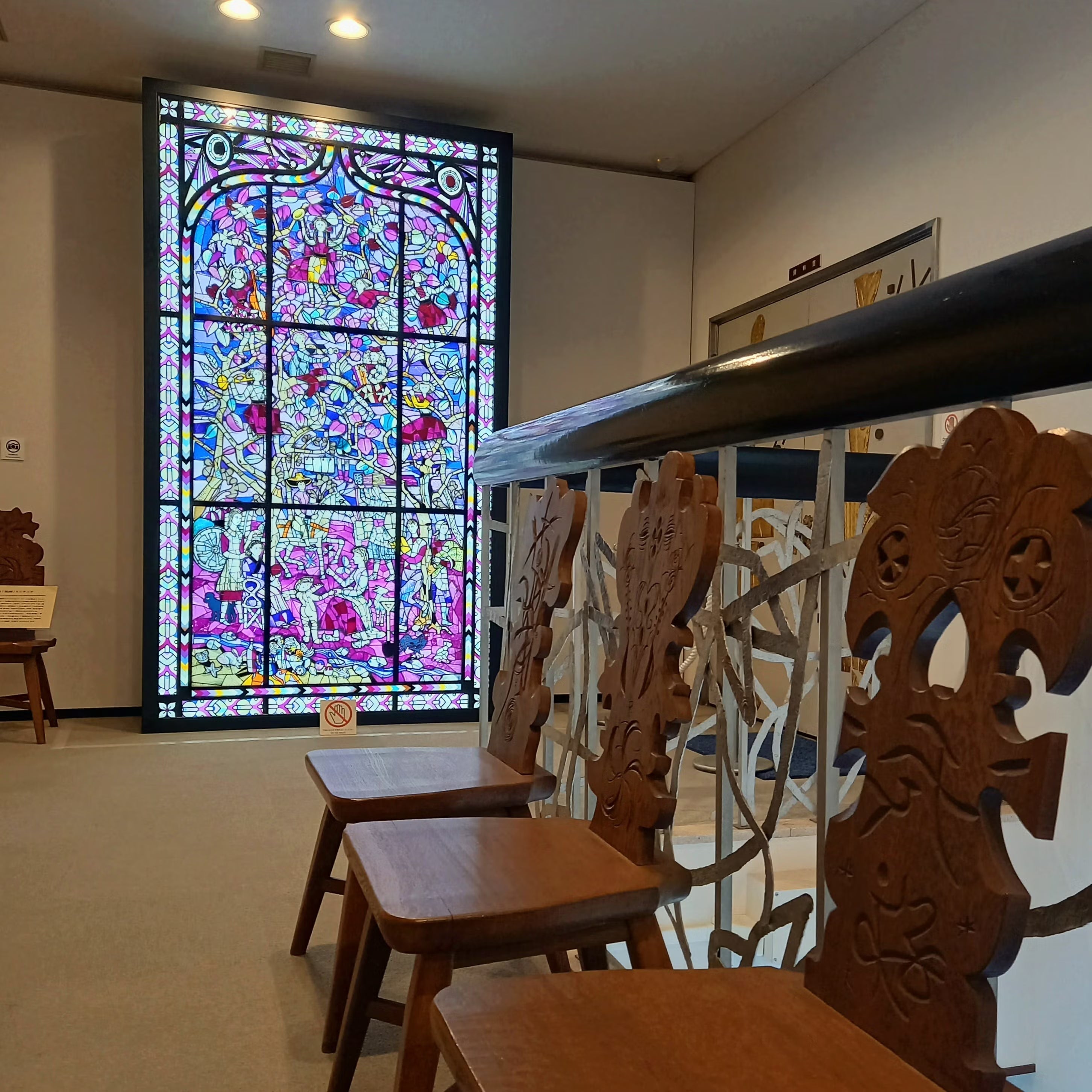
The corridor, which leads gently up from the first floor to the second, also serves as an exhibition space. It was designed with my elderly mother, who had trouble walking, in mind.
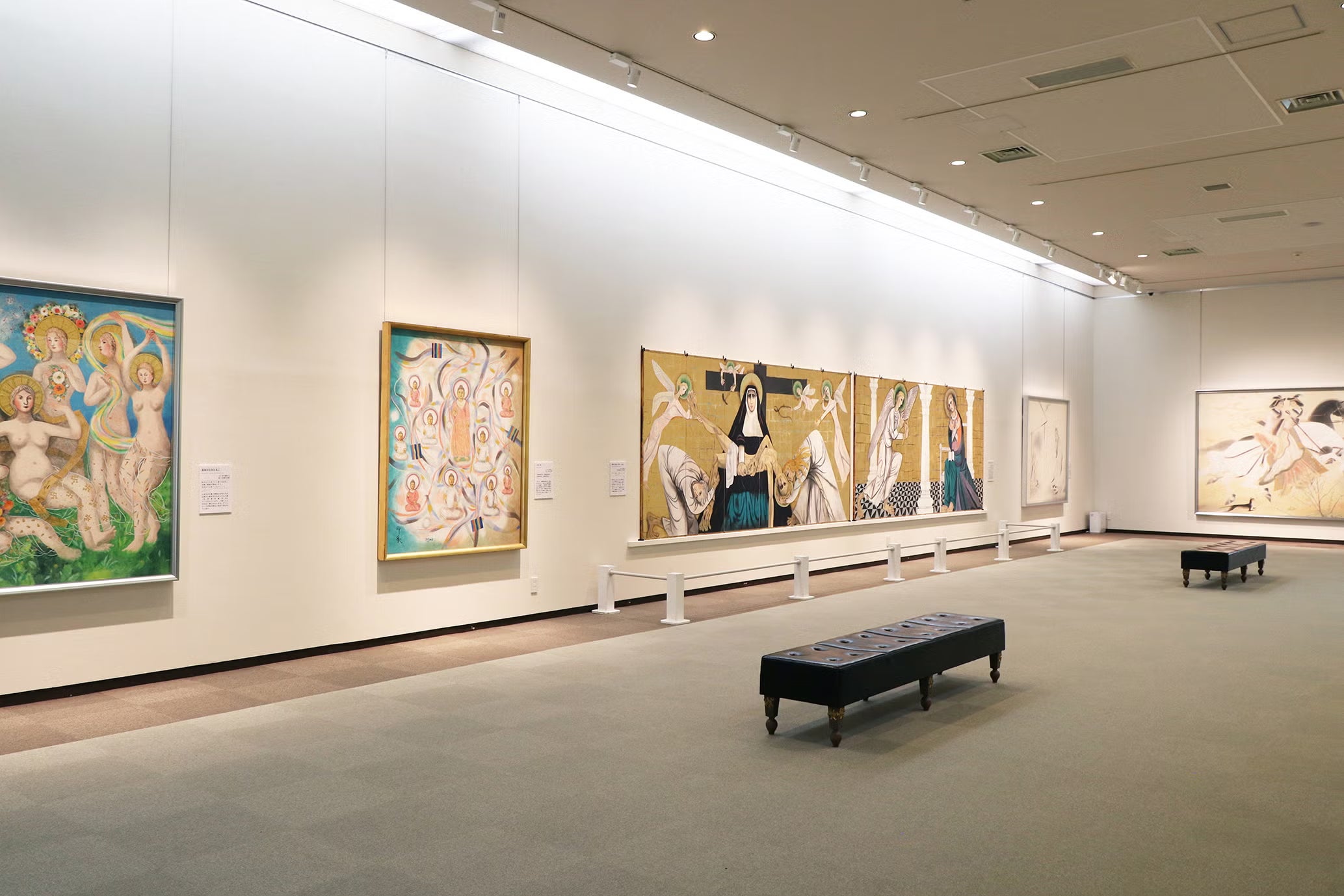
His father passed away when he was twenty, and as the family’s sole breadwinner, he chose to remain single for the rest of his life so he could devote himself to his art. Yet he cherished his mother, who had struggled tirelessly to raise nine children, and his younger siblings, in turn, supported their older brother, who served as a father figure to them.
After his death, the museum and its collection of over 2,000 works were donated to Kyoto Prefecture, and in 1992, it reopened as the Kyoto Prefectural Insho-Domoto Museum of Fine Arts.
Today, in addition to special exhibitions showcasing In'yo’s diverse artistic career, the museum also hosts special exhibitions featuring artists with ties to Kyoto, and is beloved by many visitors.
Kinugasa: The Mecca of Japanese Painting—Memories of an Artists’ Village
Kinugasa, where the museum is located, was known as “Kinugasa Artists’ Village” from the Taisho era through the early Showa era (1912–1975), a time when numerous master Japanese painters and their disciples gathered here to devote themselves to their art. Set against the lush greenery of Mount Kinugasa, this area was once dotted with the studios of many painters, who inspired one another as they pioneered new horizons in Japanese painting.

Insho also settled in this area in 1943 and created numerous masterpieces while surrounded by views of Mount Kinugasa.
The air at the foot of the mountains, enveloped in silence, and the natural light that shifts with the seasons—it was the very essence of this land’s climate and landscape that sustained his creative work.
The vestiges of the “painters’ village,” where many artists once lived and honed their skills through friendly competition, are now fading.
However, the Kyoto Prefectural Insho-Domoto Museum of Fine Arts and the mountain studio continue to stand quietly in Kinugasa, serving as precious witnesses to the memories of that era to this day.
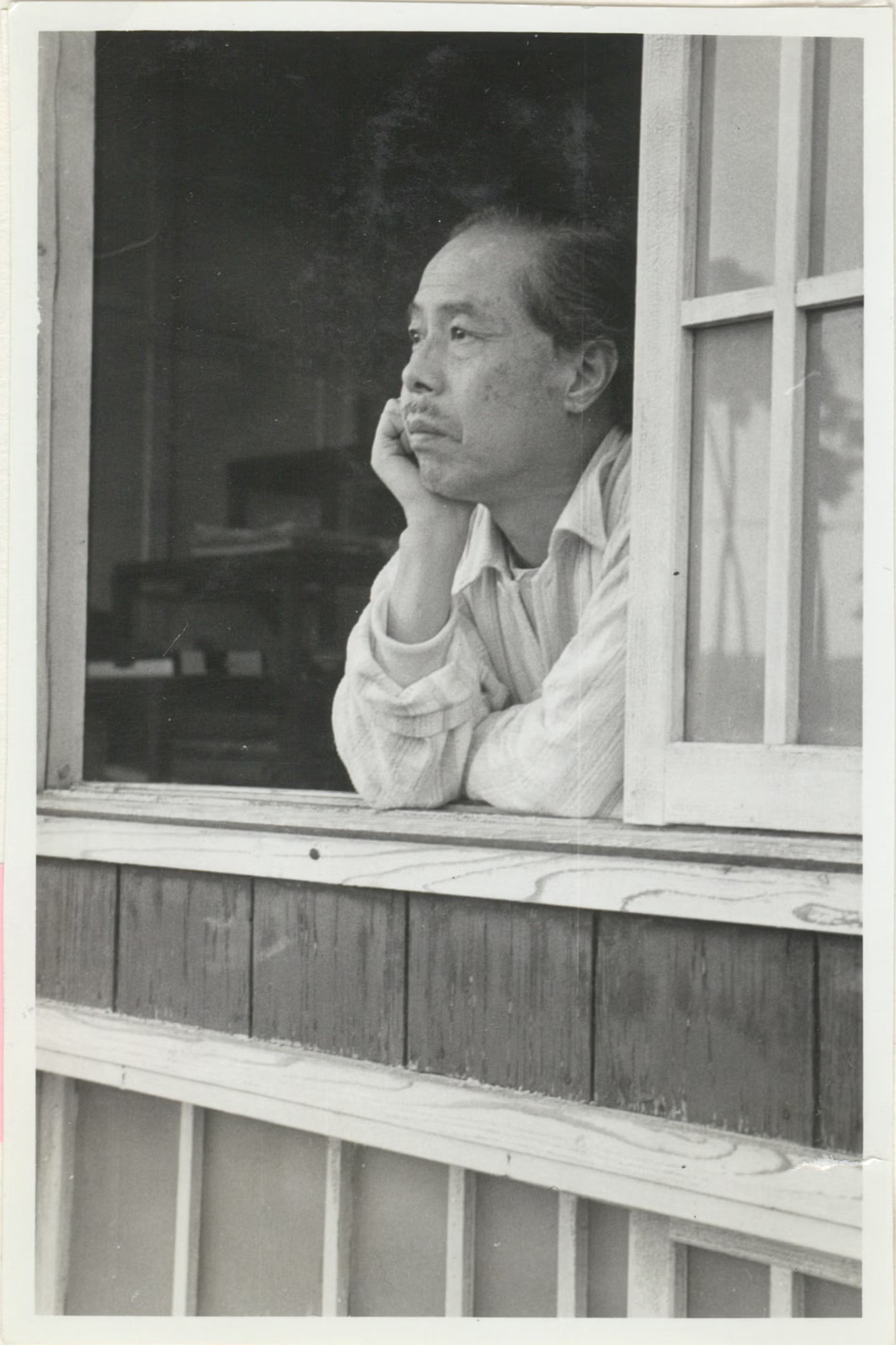
“The Mountain Studio”—A creative space where the master's presence still lingers
“The Mountain Studio” was built around 1950 on the site where the main museum building now stands, and was later relocated to the west side of the current main museum building in 1964.

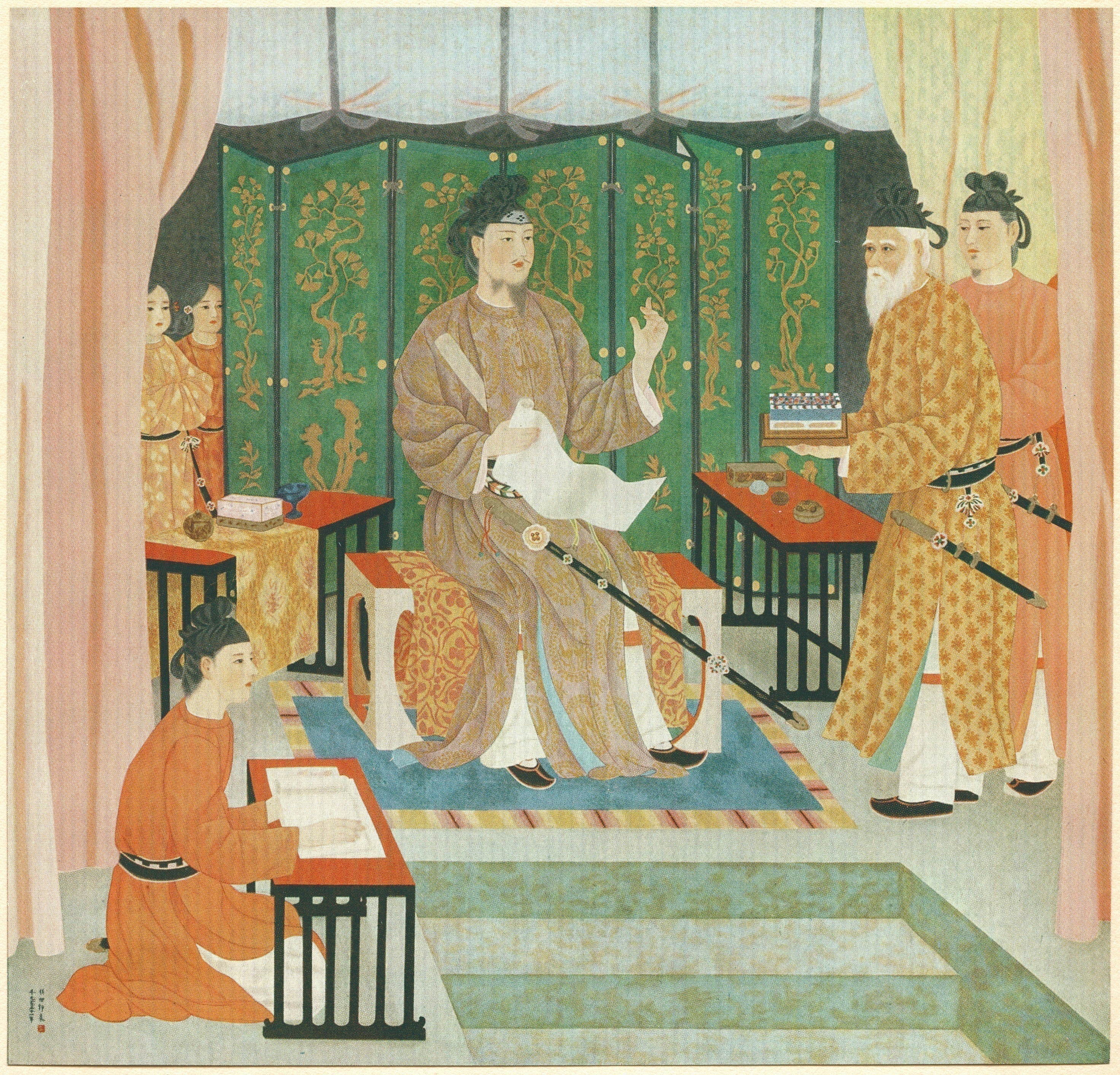
The primary reason this studio was established was to create the murals that adorn the Grand Chamber of the Supreme Court: “Enactment of Prince Shōtoku's Constitution,” “The Compassion of Empress Hashudo,” and “Prince Shōtoku's Tour of the Country.”
Commissioned to create a large mural for Japan's highest court, he established a dedicated studio for this monumental project.

To paint a massive mural, he needed a spacious workspace. He designed this building specifically as a studio for creating large-scale works.
What is particularly noteworthy is the meticulous attention to natural lighting.
The studio was designed so that natural light floods in through the large glass windows and transom. Light was essential to painting. Under natural light, he discerned subtle hues and continued to move his brush.
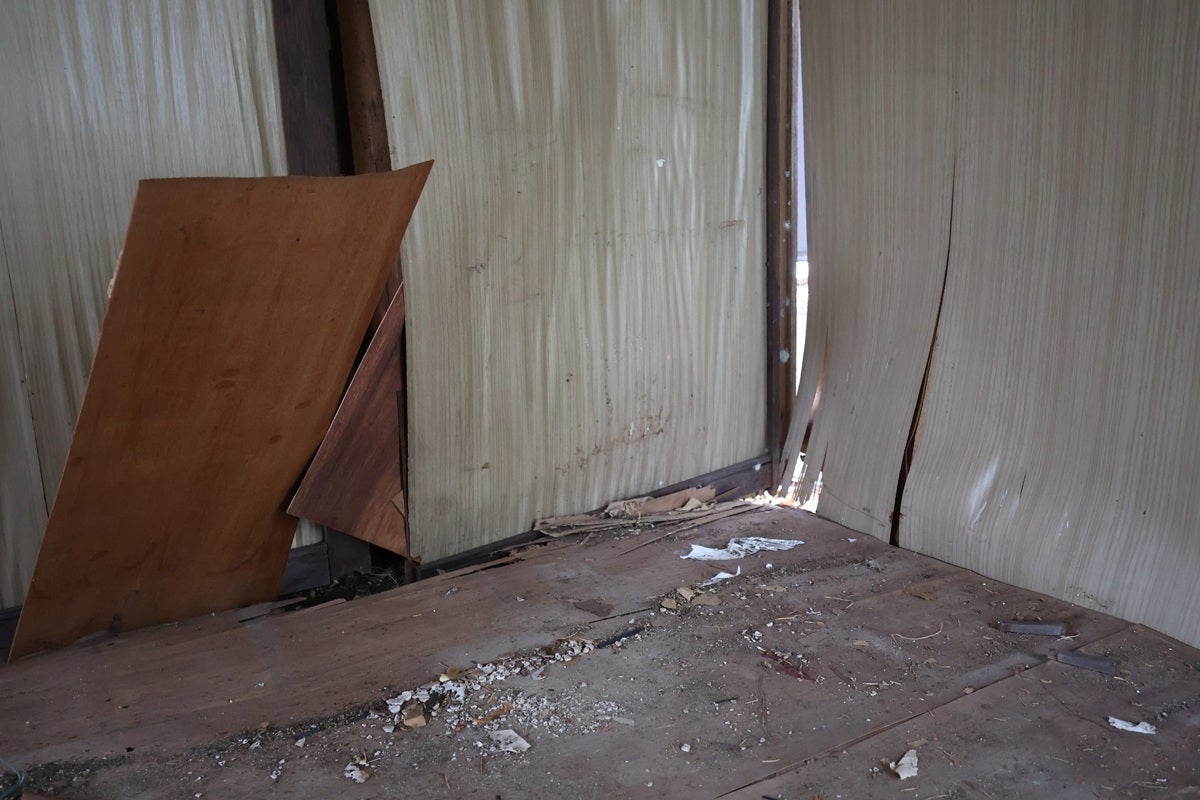
In this studio, he not only created the murals for the Supreme Court but also took on new creative challenges, including works for exhibitions. The traces of paint left on the walls and the well-worn floorboards—here, the very breath of the days he spent immersed in his work still lingers.

Why Repairs Are Needed Now—The Looming Crisis of Deterioration
“The Mountain Studio” is an old building that is approximately 75 years old. Over 75 cycles of the changing seasons, time has steadily taken its toll on the building.
The roof’s waterproofing has deteriorated, raising concerns about leaks. Deterioration is becoming noticeable on the walls, and the flooring is also showing signs of wear. If left unaddressed, this could cause serious damage to the building’s structure.
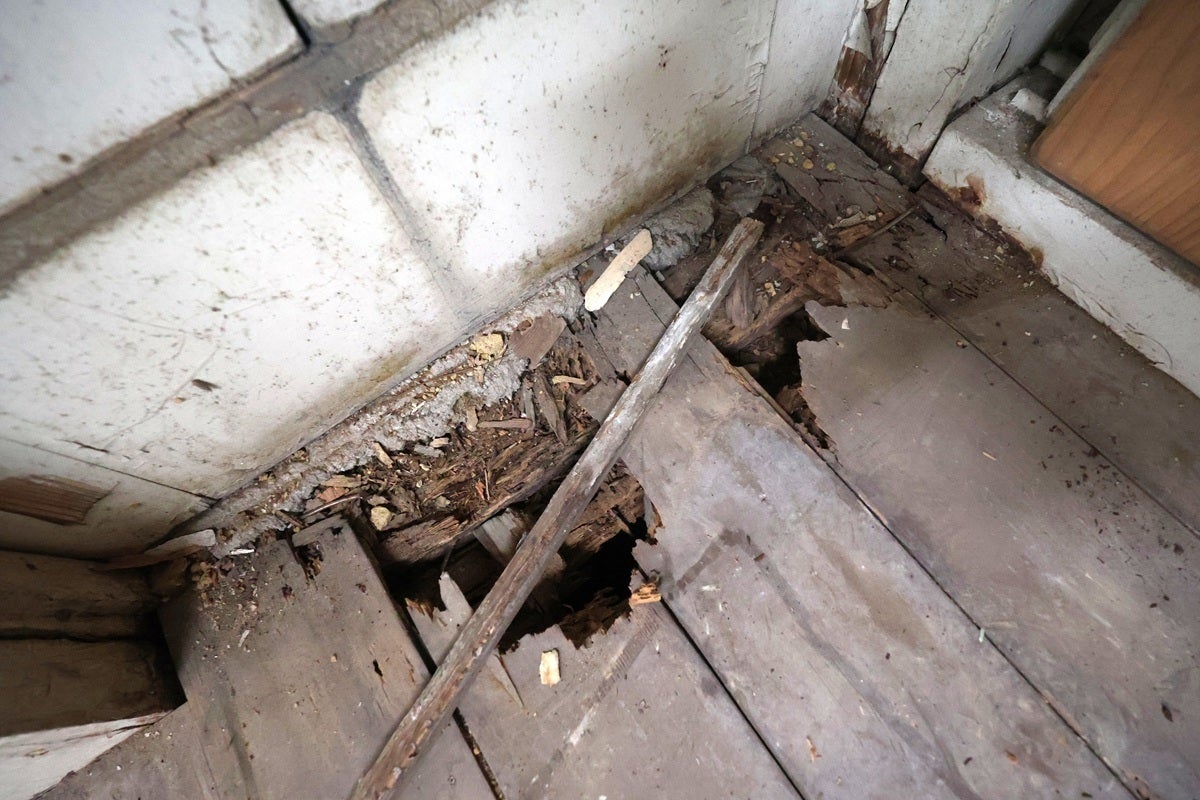
 Now that the main museum building has been designated as a National Registered Tangible Cultural Property, we must take action to preserve this precious structure.
This designation as a cultural property is proof that its value has been recognized by the national government. However, it also imposes upon us the responsibility to ensure that this building is preserved for future generations.
If we miss this opportunity to carry out repairs, we risk causing irreparable damage. Now is the last chance to take action.
If it cannot be repaired, what will be lost
What will happen if repairs are not carried out? The result will be an irreparable loss.
The building’s deterioration will continue, undermining its value as a registered tangible cultural property. If leaks and structural defects become severe, the building will no longer be open to the public or usable for any purpose due to safety concerns.
Above all, the “sacred space” itself—the very place where the painter Insho Domoto immersed himself in his creative work—will be lost forever.

In the postwar period, he faced shifts in society’s values and gradually began to reexamine the nature of Japanese painting, searching for ways to express it.
This studio preserves the spirit of an artist who devoted himself wholeheartedly to the challenge of creating new art.
Many of the works he created are now housed in art museums.
However, there is no other place besides this “Mountain Studio” where one can experience firsthand the specific space and lighting conditions in which those works were created.
A symbol of the Japanese painting culture that Kinugasa takes pride in, and a precious legacy that preserves the memories of the artists’ village—we must do everything in our power to prevent these treasures from being lost forever.

Details of the Renovation
The following work is planned for this renovation:
■ Roof Waterproofing: We will replace the waterproofing membrane to prevent leaks.
■ Wall Repairs: We will repair and repaint deteriorated wall materials.
■ Floor Reinforcement: We will replace the flooring to ensure safety.
■ Lighting System Upgrade: We will create a lighting environment that takes full advantage of the studio’s unique characteristics.
Project Schedule
May 2026: Crowdfunding campaign ends
June–August 2026: Renovation work carried out
Fall 2026: Renovation completed; special public viewing event scheduled
Use of Donations
All donations you make will be used exclusively for the preservation and public access to cultural properties.
With our target amount of 5 million yen, we will carry out essential repairs to make the studio usable.
■ Roof Waterproofing: We will replace the waterproofing membrane to prevent leaks.
■ Wall Restoration: We will repair and repaint deteriorated wall materials.
■ Floor Reinforcement: We will replace the flooring to ensure safety.
If we exceed 5 million yen during the crowdfunding period, we will set the next goal of 7 million yen and
■ Lighting System Upgrade: We will create a lighting environment that highlights the unique characteristics of the studio.
We intend to carry out these projects.
If we exceed the next goal, we will set a third goal of 10 million yen and allocate those funds toward repairs on the building adjacent to the studio.

To Everyone Considering Supporting Us
Thank you very much for reading this message to the end.
The “Mountain Studio,” where In’yo Domoto immersed himself in his art, is a treasure of Kyoto culture and a symbol of Kinugasa, the sacred site of Japanese painting.
This space is imbued with memories of the days when the master held his brush and poured his soul into his work. The traces of paint on the walls and every single worn floorboard bear witness to Insho’s creative process.
However, if left as it is, this precious space may be lost forever.
We are asking for your support to preserve this space for future generations.
Every single contribution makes a significant difference. Please join us as a partner in protecting Kyoto’s culture and passing it on to the future.
We sincerely look forward to your support.

The murals he created for shrines, temples, and churches are unmatched by any other modern or contemporary painter in terms of both quantity and quality; they are counted among Inshō’s greatest achievements and number approximately 600.
How to Support a Project on CAMPFIRE
Supporting a project on CAMPFIRE is a great way to back innovative ideas in Japan. Please follow these steps to make your pledge:
・Create an Account:
Go to the CAMPFIRE website and click the "Login/Sign up" (ログイン/新規会員登録) button. You can sign up using your email address, or via social media accounts like Google, LINE, or X (Twitter).
・Select Your Reward (Pledge):
Scroll down to the "Returns" (リターン) section on the right side (or bottom on mobile). Choose the reward tier that interests you and click the "Support this return" (このリターンを選択する) button.
・Select Payment Method:
-
You will be prompted to select a payment method. CAMPFIRE typically accepts:
Credit Cards: Visa, Mastercard, JCB, Diners Club, and American Express.
※Note: Some projects may offer other methods like convenience store payments or bank transfers, but these are generally restricted to users within Japan. Credit card is recommended for international supporters.
・Enter/Confirm Details:
Review your order, confirm your billing information, and fill in any required fields (such as shipping address if physical goods are included).
・Finalize Your Pledge:
Click the "Confirm and complete payment" (決済画面へ進む) button to finalize your support.
・Confirmation:
Once the payment is successful, you will receive a confirmation email from CAMPFIRE. You can also view your support history in your "My Page" dashboard.
Important Tips for International Supporters
・Language Barrier:
The CAMPFIRE platform is primarily in Japanese. We recommend using your browser’s built-in "Translate to English" feature (right-click on the page in Chrome or use the translation icon in Safari) to navigate the site more easily.
・Shipping Limitations:
Before pledging for physical rewards, please check if the project owner ships internationally. If it is not explicitly stated, you may want to use the "Message" (メッセージを送る) function on the project page to ask the creator if they can ship to your country.
・Currency:
All transactions are processed in Japanese Yen (JPY). Your bank will handle the currency conversion at their current exchange rate.